
Picture yourself standing in one of Europe’s most beautiful squares, a warm waffle in one hand and the smell of chocolate drifting from a nearby shop. That is Brussels in a nutshell — a city where medieval guildhalls stand minutes from the headquarters of the European Union, and where beer, chocolate and fries are taken as seriously as politics. If you are planning a first visit, these ten places will show you the very best of the Belgian capital.
1. Grand Place
Start where every Brussels visit should start. The Grand Place is the city’s central square and a UNESCO World Heritage site, ringed by opulent 17th-century guildhalls and the soaring Gothic tower of the Town Hall. Come in daylight for the architecture and return after dark, when the buildings are floodlit. If you visit in mid-August of an even-numbered year, you may catch the famous Flower Carpet, when the square is covered in a vast carpet of begonias.
2. Atomium
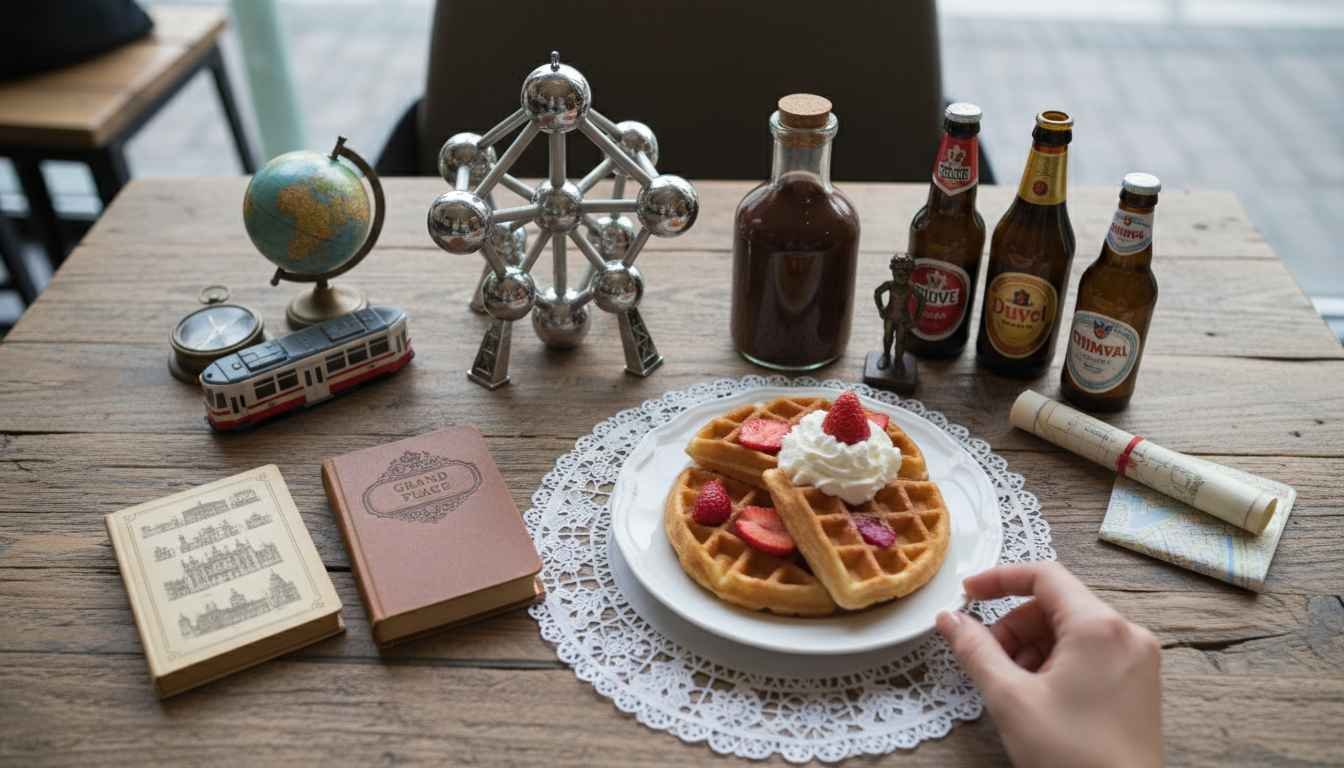
Brussels’ most recognisable landmark was built for the 1958 World’s Fair and represents an iron crystal magnified 165 billion times. The nine connected spheres rise 102 metres above the Heysel Plateau, and you can ride escalators between them to exhibitions on science and design. The top sphere holds a restaurant with panoramic views across the city — book a table for sunset if you can.
3. Royal Palace of Brussels
The official palace of the Belgian king sits at the edge of Brussels Park in neoclassical splendour. It opens to the public free of charge during the summer months, when you can walk through lavish state rooms and admire details like the ceiling of the Mirror Room, covered in the wing cases of more than a million jewel beetles. Check opening dates before you go, as the palace closes again in autumn.
4. Magritte Museum
Belgium’s most famous artist gets the museum he deserves in the heart of the Royal Quarter. The Magritte Museum holds around 230 of René Magritte’s works — paintings, drawings, sculptures and personal objects — tracing his journey from early commercial art to the bowler-hatted surrealism of The Treachery of Images. Even if modern art is not usually your thing, this one tends to win people over.
5. Manneken Pis
Yes, it is just a 61-centimetre bronze statue of a small boy — and yes, you have to see it. The Manneken Pis has stood at the corner of Rue de l’Étuve and Rue du Chêne for around 400 years, and his wardrobe of more than a thousand costumes (displayed in the nearby Garderobe MannekenPis museum) is a running joke the whole city shares. Look for his sister statue, Jeanneke Pis, in the Impasse de la Fidélité alley nearby.
6. European Quarter
Brussels is the political heart of Europe, and the European Quarter makes that tangible. The Parlamentarium, the European Parliament’s visitors’ centre, is free and genuinely engaging, with interactive exhibits explaining how EU decisions are made. Combine it with a walk past the Berlaymont building and lunch in Place du Luxembourg, where parliamentary staff unwind after sessions.
7. Sablon District
The elegant Place du Grand Sablon is Brussels’ antiques quarter, lined with galleries and weekend antique markets beneath the Gothic Church of Our Blessed Lady of the Sablon. This is also chocolate central: flagship shops of Pierre Marcolini, Neuhaus and Wittamer sit within a few steps of each other. Come hungry and leave with a box of pralines — Belgium invented the praline, after all.
8. Cathedral of St. Michael and St. Gudula
Climb the hill between the upper and lower town to this Gothic cathedral, begun in the 13th century and the setting for Belgian royal weddings and state funerals. The twin towers, vast stained-glass windows and baroque chapels reward a slow half hour, and the square outside gives you one of the best vantage points over the city centre.
9. Cinquantenaire Park and Museums
Built for the 50th anniversary of Belgian independence, the triumphal arch of the Parc du Cinquantenaire anchors one of the city’s grandest green spaces. Three major museums line the park: the Art & History Museum, the Royal Museum of the Armed Forces, and Autoworld, with its collection of vintage cars. It is an easy half-day, especially on a rainy afternoon.
10. The Marolles and Place du Jeu de Balle
Finish in Brussels’ most characterful neighbourhood. The Marolles is a working-class district of narrow streets and old pubs, and its daily flea market on Place du Jeu de Balle is a treasure hunt of vintage finds, bric-a-brac and local characters. The nearby lift at Place Poelaert also offers a free panoramic view over the lower town.
Practical Tips for Visiting Brussels
Late spring through early autumn brings the best weather, though December’s Christmas markets are a fine reason to visit in winter. The historic centre is compact and walkable; for longer hops, the STIB metro and trams cover the city. Budget travellers should know that many museums are free on the first Wednesday afternoon of each month. If you are building a wider itinerary, Brussels pairs naturally with Bruges and Ghent, both about an hour away by train — and it makes an easy stop on a summer tour of Europe’s best places to visit. For official visitor information, the visit.brussels site has up-to-date listings of events and exhibitions.
FAQ
- How many days do you need in Brussels?
Two full days cover the ten places above at a comfortable pace. Add a third day for a day trip to Bruges or Ghent.
- Is Brussels expensive for tourists?
Mid-range by Western European standards. Museum passes, free walking areas and affordable friteries keep costs reasonable compared with Paris or Amsterdam.
- What food should you try in Brussels?
Belgian fries with a choice of sauces, Brussels waffles, moules-frites (mussels with fries), stoofvlees (Flemish beef stew) and, of course, Belgian chocolate and beer.
Final Thoughts
Brussels rewards travellers who look past its bureaucratic reputation. Give it two days, walk the Grand Place at night, eat something fried, and let the city’s mix of medieval charm and modern European life win you over. Few capitals pack this much variety into such a walkable centre.