
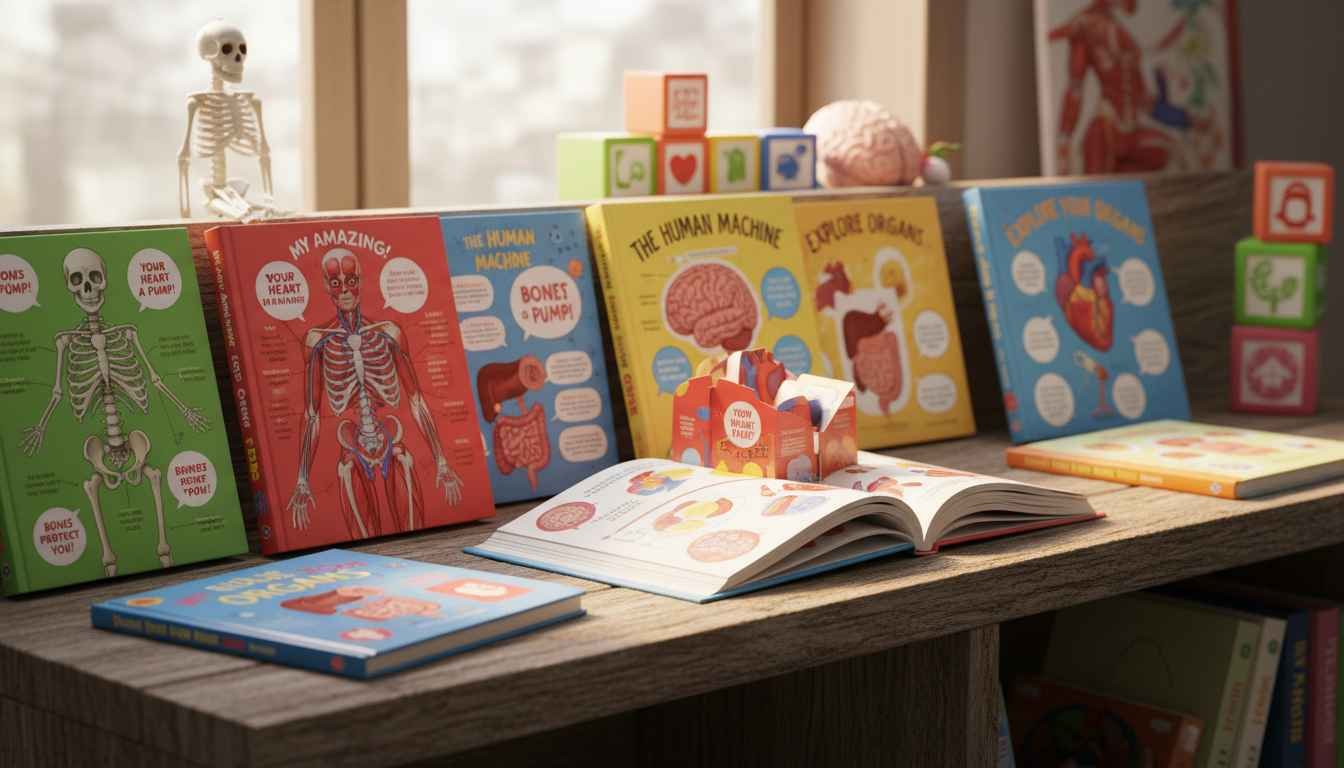

Here is the brutal truth. Kids are already curious about their bodies long before adults feel ready to explain them. As a gamer-parent who grew up learning systems, stats, and skill trees, I see anatomy the same way: it’s the original open-world game. If kids don’t get clear, age-appropriate explanations early, they’ll grind misinformation later. Anatomy books for kids aren’t “extra” – they’re core gear.
This isn’t about pushing med-school content on toddlers. It’s about unlocking body awareness, confidence, and basic health literacy in a safe, friendly way. Think tutorial mode, not hardcore PvP.
The Anatomy Books for Kids Bucket List (Unlocked Levels)
1. The “First Quest” Books (Ages 3–5)
These books focus on naming body parts, basic functions, and respecting personal space. Bright visuals, minimal text, and calm language are non-negotiable here.
Look for books that treat the body like a friendly machine – eyes help you see, lungs help you breathe, skin is your armor. No fear tactics. No overload.
2. The “Why Does My Body Do That?” Tier (Ages 5–7)
This is where curiosity spikes. Kids start asking why hearts beat faster or why they get hungry. The best anatomy books for kids at this level explain processes simply, without dumbing them down.
Illustrations matter more than ever. Cross-sections, labeled diagrams, and playful comparisons keep kids engaged without turning it into homework.
3. The “Mini Scientist” Level (Ages 7–9)
Now we’re talking systems. Skeletal, muscular, digestive – kids can handle it. Books here often include fun facts, experiments, or “did you know?” side quests.
This is also where trust is built. Clear explanations reduce fear of doctors, injuries, and bodily changes.
4. The “Growing Up Expansion Pack” (Ages 9–12)
This tier gently introduces puberty, growth, and emotional changes. The best books are factual, respectful, and shame-free.
Not every family moves at the same pace – and that’s okay. The goal is accuracy without panic.
Why Anatomy Books for Kids Actually Matter
Anatomy books for kids do more than teach biology. They support body autonomy, encourage healthy habits, and reduce anxiety around sleep, sickness, and self-care.
Creating a calm learning environment matters too. Just like bedtime routines, learning about the body works best when kids feel safe and relaxed. That’s why brands focused on comfort and rest, like Moonboon, naturally align with early childhood development – sleep, learning, and emotional security are all part of the same ecosystem.
What I Don’t Know (And Why That Matters)
I’m not a pediatrician. I don’t know how every child will emotionally respond to every topic. Some kids want all the info; others need time.
What I do know is this: books give parents control. You can pause, skip, revisit, and explain – unlike random internet content.
Recommended Tools (Parent + Kid Loadout)
• Board books with thick pages: Survive toddler raids.
• Illustrated anatomy atlases for kids: Visual learners thrive here.
• Interactive flap books: Curiosity + tactile learning = win.
• Calm reading spaces: Pair learning with comfort and routine.
• Follow-up conversations: The real XP comes from discussion.
Potential Drawbacks: Who Should Avoid This?
If a child is extremely sensitive or anxious, jumping straight into detailed anatomy may backfire. Start slower. Choose books that focus on function, not fragility.
Also, some books are poorly localized or culturally tone-deaf. Always skim first. If it feels off to you, it will feel off to your kid.
Final Boss Thoughts
Anatomy books for kids aren’t about rushing childhood – they’re about empowering it. When kids understand their bodies, they sleep better, communicate better, and feel safer in their own skin.
Think of these books as long-term buffs. You won’t see the full effect immediately, but over time, they stack.