

Stand in the Court of the Lions as late-afternoon light moves across carved plaster, and you will understand why Spain keeps pulling travelers back century after century. Few countries compress this much history into one trip: Moorish palaces, Roman aqueducts, Gothic cathedrals, and medieval hill towns are often less than a train ride apart. This guide walks you through the best historical places to visit in Spain, from world-famous icons to quieter corners that reward the curious.
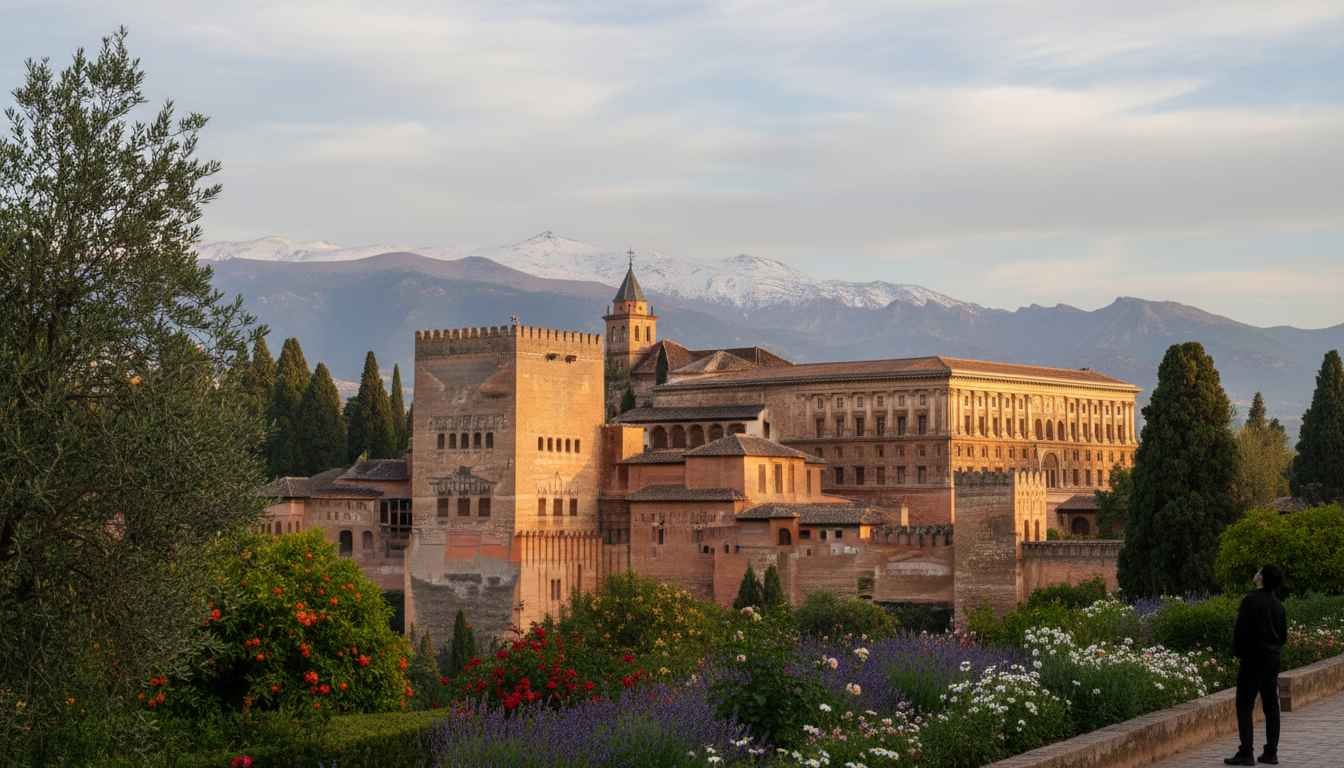
1. The Alhambra, Granada
No list of historical places in Spain starts anywhere else. This hilltop palace-fortress was the last stronghold of the Nasrid dynasty, the final Muslim rulers of Iberia, and its courtyards — the Court of the Myrtles, the Court of the Lions — remain the finest Islamic architecture in Europe. A UNESCO World Heritage site since 1984, it draws millions of visitors a year. Book tickets for the Nasrid Palaces weeks or even months ahead; entry to that section is strictly time-slotted and sells out fast. The official site is the only place that guarantees the face-value price.
2. The Mezquita-Catedral, Córdoba
In Córdoba, a forest of 856 marble and granite columns fills what was once the Great Mosque of the western Islamic world, begun in 784 under Abd al-Rahman I. After the Reconquista, a Renaissance cathedral nave was planted in the very center — the clash of the two architectures is startling and magnificent. Climb the bell tower (the old minaret) for a view over the old Jewish quarter’s whitewashed lanes.
3. Royal Palace of Madrid and the Prado
Madrid pairs royal history with one of the world’s great art collections. The Royal Palace, with more than 3,000 rooms, is among the largest palaces in Western Europe; the state apartments, throne room, and armory are open to visitors. A short walk away, the Prado Museum holds the definitive collections of Velázquez, Goya, and El Greco — history told in paint. Between them, Puerta del Sol has been the city’s meeting point since the 16th century, marked by the famous Kilometer Zero plaque.
4. Roman Ruins of Tarragona
Tarragona, on the northeastern coast, preserves some of the finest Roman remains outside Italy. The seaside amphitheater once held gladiatorial games; nearby stand the circus, the forum, and stretches of the old city walls. The whole archaeological ensemble is a UNESCO World Heritage site, and the on-site museum makes the Roman city of Tarraco feel startlingly alive. If you are planning a wider summer trip across Europe, Tarragona pairs beautifully with Barcelona, just an hour away by train.
5. Sagrada Família and the Gothic Quarter, Barcelona
Antoni Gaudí’s Sagrada Família has been under construction since 1882 and remains the most visited monument in Spain — part Gothic cathedral, part modernist fever dream. In the Gothic Quarter, you can walk streets laid out in the Middle Ages: the 13th-century cathedral, the Plaça Reial, and fragments of the Roman wall that founded the city as Barcino.
6. Toledo: the City of Three Cultures
Thirty minutes by high-speed train from Madrid, Toledo was once the capital of Spain and a rare place where Christian, Muslim, and Jewish cultures overlapped for centuries. The Gothic cathedral, the Alcázar fortress, the 10th-century Cristo de la Luz mosque, and two medieval synagogues sit within a walled hill town that is itself a UNESCO World Heritage site.
7. The Roman Aqueduct of Segovia
Nearly 2,000 years old and built without mortar, Segovia’s aqueduct carries water over 167 granite arches through the heart of the old town. It is one of the best-preserved Roman engineering works in the world. Walk the full length at sunset, then try the city’s famous roast suckling pig — the aqueduct plaza anchors a very walkable old quarter.
8. Santiago de Compostela Cathedral
For over a thousand years, pilgrims have walked the Camino de Santiago to reach this cathedral in Galicia, where tradition holds the remains of St. James rest. The baroque Obradoiro façade is what most visitors know, but step inside for the older Romanesque Portico of Glory and the botafumeiro, the giant swinging incense burner used on feast days. You don’t need to walk 800 kilometers to feel the weight of the place — though thousands do each year.
9. Burgos Cathedral
Often overshadowed by its famous neighbors, Burgos Cathedral is one of the purest examples of Gothic architecture in Spain and a UNESCO World Heritage site in its own right. Its spires dominate the old town, and inside you’ll find the tomb of El Cid, Spain’s legendary medieval hero. If your search for the best place to visit in Spain keeps circling the big cities, Burgos is the detour that surprises people most.
Practical Tips for a History Trip Through Spain
Travel in spring (April–June) or autumn (September–October): the weather is mild, crowds are thinner, and southern cities like Córdoba and Seville are far more comfortable than in summer. Spain’s high-speed AVE trains make multi-city history itineraries easy — Madrid to Córdoba is under two hours, Madrid to Barcelona about two and a half. Many museums offer free or reduced entry on certain evenings; check official sites before you go. For current opening hours and official ticket links, the Spain tourism portal (spain.info) is the reliable starting point. And build rest time into your days: most historic centers are best explored on foot, and the midday break is still real in smaller towns.
FAQ
Do I need to book Alhambra tickets in advance?
Yes — this is the single most important booking of a Spain history trip. Nasrid Palaces tickets are time-slotted, limited, and routinely sell out weeks or months ahead, especially in spring and autumn. Buy from the official ticket site as early as your dates are fixed.
How many days do I need for Spain’s historical highlights?
Ten days covers the essentials comfortably: three in Madrid (with a Toledo day trip), two in Córdoba or Seville, three in Granada, and two in Barcelona. Tarragona and Segovia work as day trips from Barcelona and Madrid respectively.
Is Spain’s historical sightseeing family-friendly?
Very. Most major sites offer family tickets and audio guides, and places like the Royal Palace armory, Segovia’s aqueduct, and the amphitheater in Tarragona tend to hold children’s attention better than another cathedral interior.
Final Thoughts
Spain’s history isn’t locked behind glass — it’s the aqueduct you walk under on your way to lunch, the mosque columns you touch, the cathedral square where the evening promenade still passes. Start with the Alhambra and the Mezquita, add one Roman site and one Gothic cathedral, and you’ll leave with a sense of how many civilizations have left their mark on this one peninsula. That layered feeling is what makes these the best historical places to visit in Spain — and why most visitors start planning their return trip before they’ve left.