
You hear it before you see it: temple bells over the rush of the Ganges, the river sliding green and fast between Himalayan foothills. Rishikesh is two destinations in one — the “Yoga Capital of the World,” where ashrams and aartis draw seekers from every continent, and India’s adventure-sports hub, where the same river that hosts evening prayers carries rafters through Class III and IV rapids by day. These are the best places to visit in Rishikesh, from sacred ghats to adrenaline-soaked stretches of the Ganga.
1. Triveni Ghat: The Spiritual Center
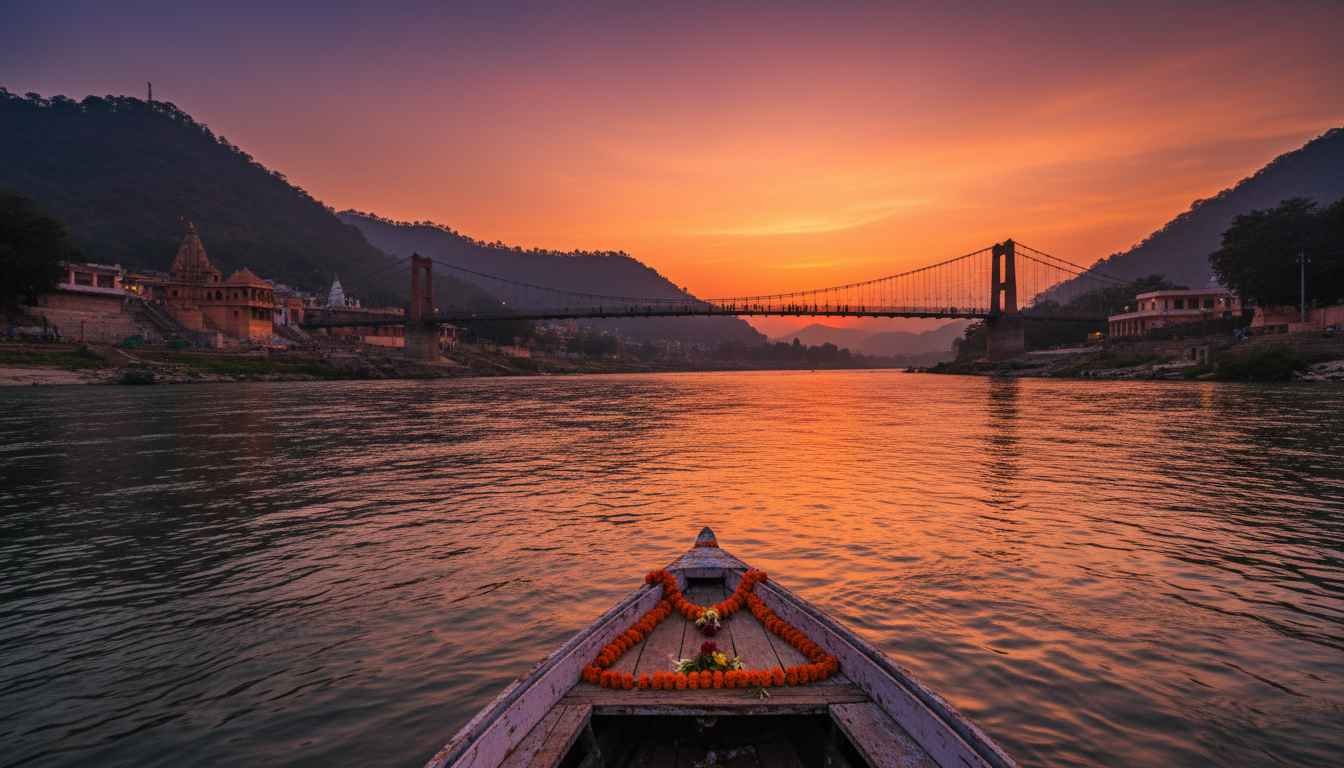
Triveni Ghat is Rishikesh’s most important bathing ghat — the confluence point of the Ganga, Yamuna, and the mythical Saraswati. Every evening, the Ganga Aarti fills the steps with chanting, lamps, and hundreds of floating diyas on the water. Arrive 30–45 minutes early for a good spot; the ceremony begins at sunset and runs about an hour. It is the single experience no visitor should miss.
2. Lakshman Jhula and Ram Jhula: The Iconic Bridges
The two suspension bridges spanning the Ganga are Rishikesh’s signature sights. Lakshman Jhula (450 feet long) is named for the legend that Lakshmana crossed the river here on a jute rope; Ram Jhula, slightly downstream, connects the Sivananda and Swarg ashram areas. Walk across at dawn when the river is misty and the crowds are thin — the views up and down the valley are spectacular. (Note: the bridges undergo periodic maintenance closures; check locally before planning your route around them.)
3. Neelkanth Mahadev Temple: The Pilgrimage Above the Clouds
Set at 1,330 meters in the hills about 12 km from town, Neelkanth Mahadev Temple is dedicated to Lord Shiva and draws pilgrims year-round — especially during the month of Shravan. The drive (or the trek, for the energetic) winds through dense forest with valley views. Go early in the morning to beat the crowds, and pair it with the short hike to nearby waterfalls if you have the time.
4. Parmarth Niketan Ashram: Yoga and the Ganga Aarti
The largest ashram in Rishikesh, Parmarth Niketan hosts daily yoga classes, meditation sessions, and its own famous evening Ganga Aarti on the riverbank. Even if you are not staying here, visitors are welcome to attend the aarti and many of the programs. For a deeper dive, the ashram runs week-long yoga and meditation courses that draw students from around the world.
5. Beatles Ashram (Chaurasi Kutia): Rock History in the Forest
In 1968, the Beatles spent weeks at Maharishi Mahesh Yogi’s ashram — now the abandoned, graffiti-covered Chaurasi Kutia, inside Rajaji National Park. The meditation cells, the ruins of the lecture hall, and the layers of psychedelic street art make it one of India’s strangest and most photogenic attractions. Entry requires a park ticket; go in the morning for the best light and fewest visitors.
6. White-Water Rafting on the Ganga: The Adventure Classic
Rishikesh is India’s rafting capital. The standard 16 km run (Shivpuri to Rishikesh) takes about 3 hours and hits Class III rapids like Roller Coaster and Golf Course; the 26 km run from Marine Drive adds Class IV drops for experienced rafters. Licensed operators provide safety gear, guides, and briefings — book through registered agencies, never from touts on the ghats. The season runs roughly September to June; the river is closed to rafting during the monsoon.
7. Bungee Jumping and Giant Swing: India’s Highest
At Mohan Chatti, about 25 minutes from town, India’s highest fixed-platform bungee jump (83 meters) drops you toward a river valley floor — alongside a giant swing and Asia’s longest flying fox. It is run by a professional outfit with international safety standards, and it has become a bucket-list item for India’s adventure travelers. Book ahead on weekends.
8. Vashishta Cave (Vashishta Gufa): Silence by the River
A short drive upstream, Vashishta Cave is where the sage Vashishta is said to have meditated — and it remains a working meditation spot. The small cave sits right above the river; inside, the only sound is the Ganga. Meditators sit shoulder to shoulder in silence. Even a 20-minute visit resets something. Combine it with the nearby waterfall trail.
9. Rajaji National Park: Wildlife on the Doorstep
Rishikesh’s adventure side extends beyond the river. Rajaji National Park, at the edge of town, protects elephants, leopards, and over 300 bird species across the Shivalik foothills. Morning and afternoon jeep safaris run from the Chilla and Motichur gates (November–June). It is an easy half-day that most visitors overlook.
Best Time to Visit Rishikesh
September to March is the prime window: pleasant days, cool evenings, and full adventure operations. October–November offers the clearest skies. December–January is chilly (carry layers) but atmospheric, and the ghats are at their least crowded. Avoid the monsoon (July–August): the river swells dangerously, rafting stops, and landslides can close hill roads.
The Uttarakhand tourism board’s official site has current advisories on river activities and road conditions — worth checking before you travel.
How to Reach Rishikesh
The nearest airport is Jolly Grant (Dehradun), about 35 km away, with connections from Delhi and Mumbai. Haridwar Junction (25 km) is the nearest major railway station. From Delhi, Rishikesh is roughly a 6-hour drive or overnight train ride — most travelers combine it with Haridwar or a wider Uttarakhand circuit. If Rishikesh leaves you wanting more of India’s hill country, Ooty’s scenic beauty and cultural heritage make a fine next stop, and Vasco da Gama in Goa offers a very different, coastal kind of escape.
Final Thoughts
Rishikesh asks you to hold two ideas at once: stillness and speed, prayer and rapids, dawn meditation and a bungee cord. That is exactly why it works — few places on earth let you attend a 5,000-year-old ritual in the evening and run Class IV rapids the next morning. Come for three days minimum, give the river your mornings and the ghats your evenings, and you’ll understand why travelers have been making this pilgrimage — spiritual, adventurous, or both — for generations.