
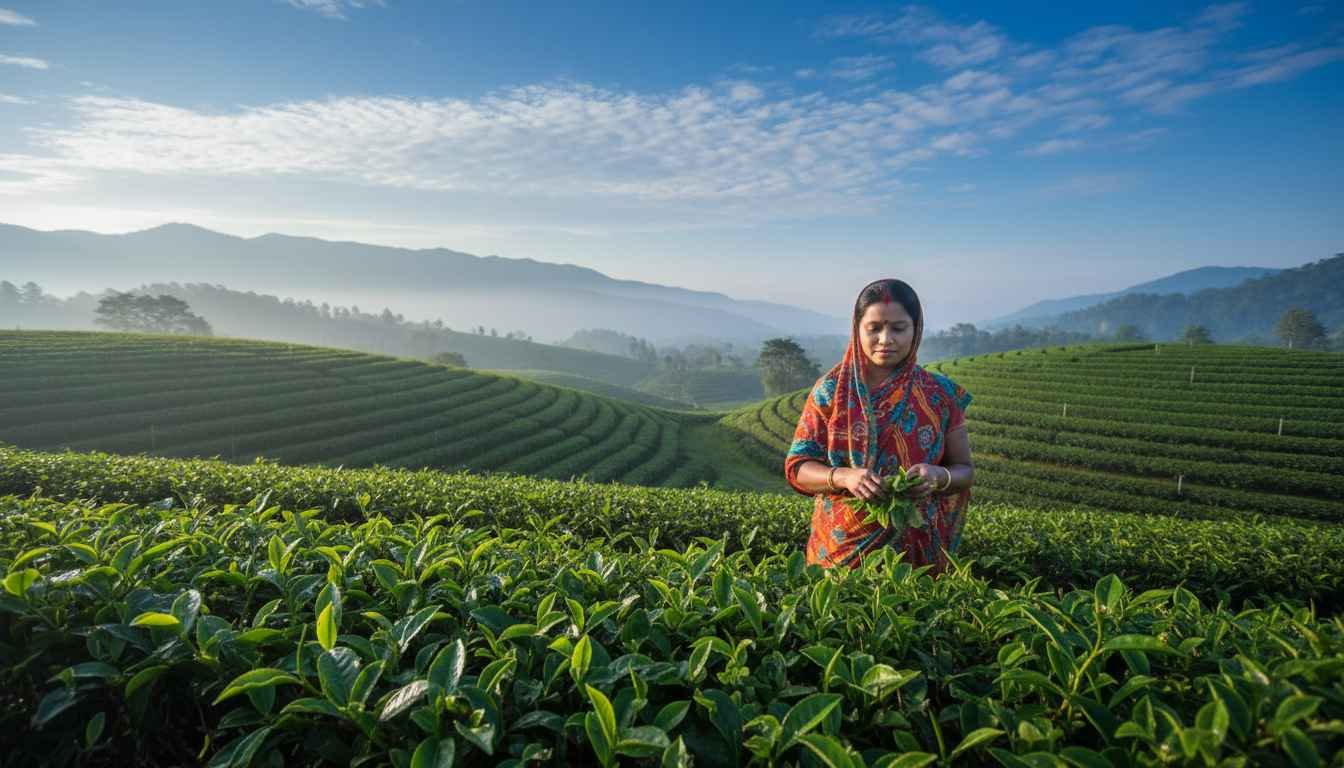
Picture this: you are standing at the edge of a tea garden at dawn, mist curling over row after row of green bushes while a picker’s basket slowly fills beside you. An hour later you are on a small wooden boat, gliding over water so clear you can count the stones on the riverbed. This is Sylhet — the northeastern corner of Bangladesh that most travelers skip, and exactly the corner they shouldn’t.
Sylhet division sits against the Indian border, where the flat delta land of Bangladesh suddenly rumples into the Khasi and Jaintia hills. That geography is the whole story: rivers run clear here, forests stay green, and the tea estates — some of the oldest in the subcontinent — climb the slopes. The best places to visit in Sylhet, Bangladesh reward travelers who like their nature up close and their crowds thin.
Jaflong: Clear Rivers and the View into the Khasi Hills
Start at Jaflong, the border town where the Piyain River slides down out of the hills. On a clear day the water is startlingly transparent, and the far bank rises into the Khasi hills of Meghalaya, India. Boatmen will row you upriver past wide stone beds where workers collect rocks from the riverbed — a working landscape as much as a scenic one. Come in the drier months for the clearest water, and bring a wide-angle lens: the contrast of green hills, pale stones and blue water is the single most photographed scene in Sylhet.
Ratargul Swamp Forest: Bangladesh by Boat
Ratargul is one of the few freshwater swamp forests in this part of the world, and the only honest way to see it is from a small country boat. Your boatman poles you through corridors of hijol and koroch trees while kingfishers work the waterline. In the monsoon the forest floods deep and the canopy closes overhead; in winter the water drops and you can walk parts of the trails. Either way, go with a local guide — the channels all look alike, and the guides know where the herons roost. Carry drinking water and sun protection; there are no shops once you are on the water.
Lalakhal: The River That Looks Photoshopped
A short drive from Jaflong, Lalakhal is famous for one thing: the Shari River runs an almost unreal shade of blue-green here. The color comes from the mineral-rich hill water, and on a sunny morning the river genuinely looks edited. Take a boat ride upstream toward the zero point at the border, where the hills close in on both sides. It pairs perfectly with Jaflong as a single day trip, and the boatmen’s smaller craft can nose into side channels the bigger boats can’t reach.
Bisnakandi and Sada Pathor: Stone Country
Further into the border hills, Bisnakandi and Sada Pathor are landscapes built from stone — riverbeds of smooth white and grey rocks with the Khasi hills stacked behind them. Sada Pathor (literally “white stone”) near Bholaganj is the more developed of the two, with clearer water for wading on a hot day. These are monsoon-fed spots at their best: visit after the rains when the streams are running but the roads are passable, and wear shoes you don’t mind getting wet.
Hazrat Shah Jalal Mazar Sharif: Sylhet’s Spiritual Heart
No visit to Sylhet is complete without the shrine of Hazrat Shah Jalal, the 14th-century Sufi saint who brought Islam to the region. His mazar in Sylhet city draws pilgrims from across Bangladesh and beyond, and the complex — with its mosque, pond and shrine — is as much a cultural experience as a religious one. Visit in the late afternoon when the light softens and the crowds thin; dress modestly and follow the lead of local visitors inside the shrine complex. The pond’s resident fish, fed by pilgrims, are a small spectacle of their own.
Tea Country: Malnicherra and the Road to Srimangal
Sylhet’s tea story starts at Malnicherra, one of the oldest tea estates in Bangladesh, established in the 1850s on the edge of the city — an easy half-day trip, with a factory visit if you arrange it ahead. For the full tea-country immersion, continue to Srimangal in neighboring Moulvibazar district, the self-styled tea capital: endless estates, the famous seven-layer tea you have to see to believe, and Lawachara National Park, a protected rainforest known for its gibbons and walking trails. If your Sylhet trip has a second act, this is it.
What to Eat in Sylhet
Sylheti food has its own signatures. Try beef cooked with shatkora — a bitter, aromatic citrus fruit grown in the region — and the winter pitha (rice cakes) sold at street stalls. The seven-layer tea of Srimangal, with its distinct bands of color and flavor, is worth the trip alone. In Sylhet city, the restaurants around Zindabazar serve the most reliable versions of all of these.
When to Visit Sylhet
November to February is the sweet spot — cooler, drier days and clear skies. March to May turns hot and humid. June to September is monsoon: the rivers and waterfalls are at their most dramatic, but expect heavy rain and the occasional washed-out road. If boating at Ratargul or Lalakhal is your priority, the shoulder months around the monsoon give you full rivers without the full deluge.
Getting to Sylhet
Osmani International Airport connects Sylhet with Dhaka by air — the fastest option. Overland, comfortable buses and intercity trains run from Dhaka, roughly five to seven hours by road depending on traffic. Once in Sylhet, hire a car with a driver for the day for Jaflong, Lalakhal and the border spots; the roads are fine but the signage is not. For official travel information, the Bangladesh Tourism Board is the authoritative source. And if Sylhet has you hooked on the country, Chittagong makes a natural second stop — see our guide to the best places to visit in Chittagong, Bangladesh for the coastal half of the story.
FAQ
- How many days do you need in Sylhet?
Three full days cover the essentials: one for Jaflong and Lalakhal, one for Ratargul and the city shrines, and one for the tea estates or a Srimangal day trip. - Is Sylhet safe for foreign tourists?
Sylhet is generally considered one of the calmer, more welcoming parts of Bangladesh for visitors. Standard precautions apply — keep valuables discreet, drink bottled or treated water, and use registered transport. - What is Sylhet most famous for?
Tea gardens, the clear rivers of Jaflong and Lalakhal, the Ratargul swamp forest, and the shrine of Hazrat Shah Jalal.
Final Thoughts
Sylhet doesn’t shout for attention — that’s precisely its charm. Come for the tea gardens at dawn and the rivers that run impossibly clear, stay for the shrines and the slow rhythm of the border hills, and you’ll leave wondering why more people don’t make the trip northeast.