

The Short Answer: May and September
You step off the train in Edinburgh as a pale sun breaks through the clouds, and the castle glows gold above the rooftops. An hour later a sharp shower sends everyone ducking into cafés — and an hour after that, a rainbow arcs over Arthur’s Seat. That is Scotland: four seasons in a single day is only half a joke here. If you are planning a trip and hoping for the best possible weather, the month you choose matters more than almost anywhere else in Britain, and the answer is not the one most people expect.
It is not July or August. May and September are the two months Scotland’s travel writers keep coming back to. May is usually the driest month across most of the country, with long daylight hours and the countryside at its greenest — and the biting midges that plague summer hikers have barely appeared yet. September offers mild temperatures, fading midges and far fewer crowds than high summer, with the first hints of autumn colour creeping in. Both sit just outside the peak-price summer window, so accommodation tends to be noticeably cheaper too.
June is a strong runner-up, with the longest days of the year. But once July and August arrive, the Highlands fill with midges, the crowds peak, and prices climb well above the rest of the year. Winter, meanwhile, has its own quiet appeal — more on that below.
What Shapes Scotland’s Weather
Scotland has a maritime climate, shaped by the Atlantic and the tail end of the Gulf Stream. That keeps it milder than its northern latitude suggests — Edinburgh sits at roughly the same latitude as Moscow — but it also makes the weather famously changeable. As one seasoned Scotland guide puts it, “if you don’t like the weather, wait twenty minutes” is only half a joke: sun, cloud, a sharp shower and a rainbow can genuinely arrive in a single afternoon, especially in the west and the Highlands. Since no month can guarantee blue skies, experienced travellers choose their dates for daylight, crowds, midges and events — then simply come prepared.
Geography matters enormously. The west coast is much wetter than the east: Edinburgh and the east coast typically see around 130–150 rain days a year, while the west Highlands get 200–250. If good weather is your main concern, weighting your itinerary toward the east — Edinburgh, St Andrews, Aberdeen and the east coast castles — stacks the odds in your favour.
A Month-by-Month Look at the Best Windows
May — the sweet spot. The driest month for most of the country, with mild temperatures, long daylight hours and wildflowers and bluebells in bloom early in the month. Attractions have opened for the season but the summer crowds have not yet arrived, and the midges are mostly still dormant. For many travellers, this is the single best month to visit Scotland.
June — the longest days. Nearly 18 hours of daylight around the summer solstice means you can hike, sightsee and drive scenic routes long into the evening. Weather is generally good, though midges begin to appear toward the end of the month. Expect higher accommodation prices as Scottish school holidays approach.
July and August — the warmest, and the busiest. These are the warmest months, with average highs around 18°C — though occasional heatwaves can push temperatures far higher, so don’t expect it every day. The trade-offs are real: midges are at their worst (active from late May through early September, peaking in July and August in the west Highlands), crowds are at their peak, and August brings the Edinburgh Festival, when the capital bursts with performances but hotel prices hit their absolute peak.
September — the insider’s pick. Mild weather, fading midges, crowds thinning fast and autumn colours beginning toward the end of the month. September is often wetter than the summer months, but it offers the best balance of decent weather, space to breathe and shoulder-season prices — and harvest season brings excellent local food to the table.
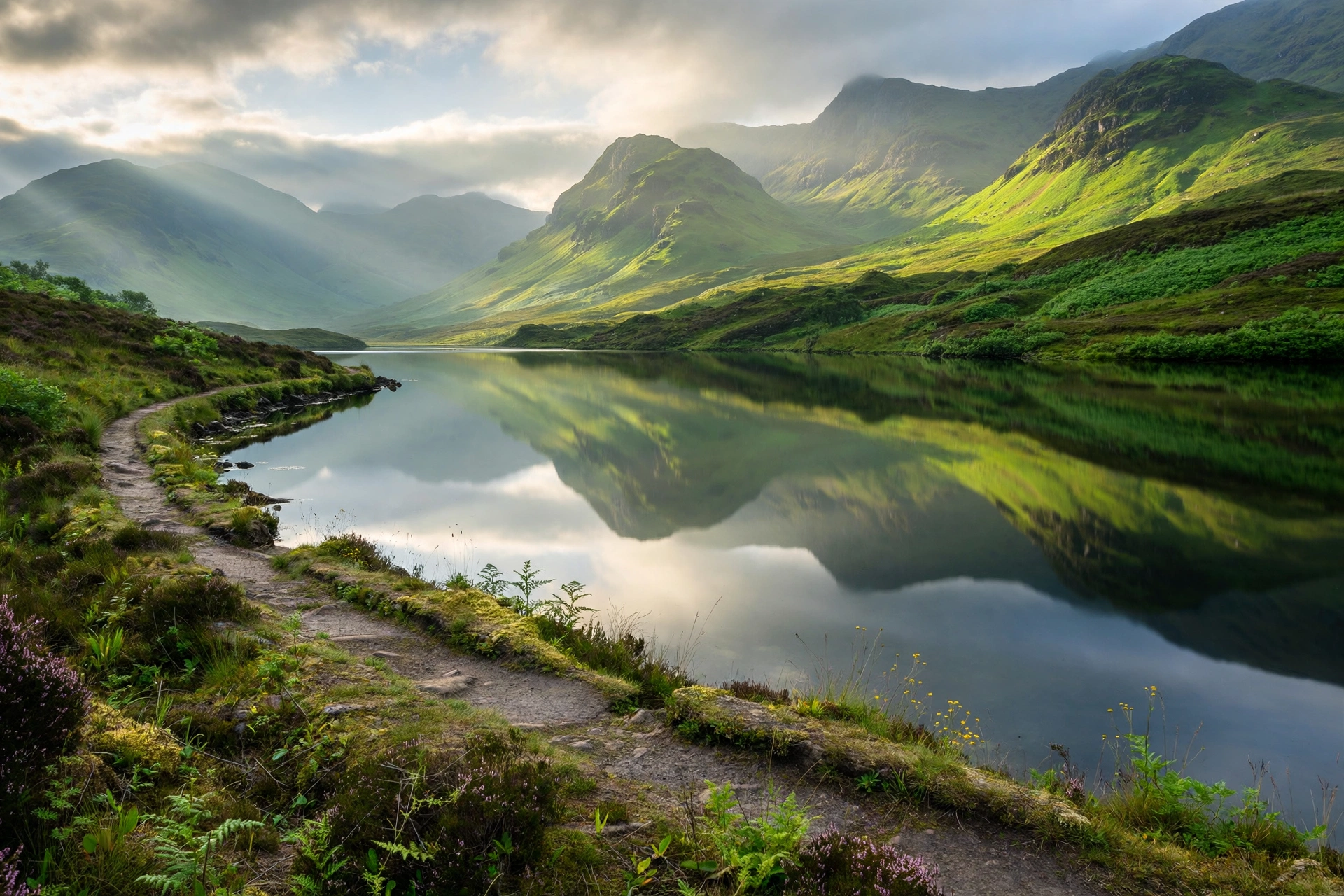
What About Winter?
October through January are the wettest months, and from November the days shrink to just 6–8 hours of daylight, with temperatures typically between 0 and 8°C and strong winds on the coasts and in the Highlands. Snow is frequent in the Cairngorms and around Ben Nevis, and some ferries and rural attractions close for the season.
But winter is also the cheapest time to visit, with far fewer tourists, festive Christmas markets in the cities and a genuinely magical atmosphere. Edinburgh and Glasgow stay lively all winter — our guide to places to visit in the UK during winter covers the best cold-season experiences across the country, including Edinburgh’s festive charm. If you trade hiking boots for museum tickets and whisky distillery tours, winter can be wonderful.
When to Visit for Your Kind of Trip
Hikers and road-trippers: aim for May or June, when days are long, trails are at their driest and the midges have not yet peaked. Keep at least one flexible day in your plan — if the weather turns on a hill day, swap it for a distillery, a castle or a museum.
City visitors: Edinburgh and Glasgow are year-round destinations, but the shoulder months give you the best balance of decent weather, manageable crowds and fair prices. If you are pairing Scotland with a short urban break, our three-day city break itinerary guide shows how to build a loose, restful framework around a long weekend instead of a minute-by-minute spreadsheet.
Wildlife watchers: May brings nesting seabirds and active wildlife along the coasts, with the long daylight hours giving you more time in the field.
Festival-goers: August is non-negotiable — the Edinburgh Festival Fringe fills the capital with thousands of performances — but book accommodation months ahead and brace for peak prices.
How to Pack for Scotland, Whatever the Month
Whatever the calendar says, pack layers and a proper waterproof jacket — not just water-resistant — plus sturdy walking shoes. The weather can shift within hours, so dress for a range of conditions in a single day rather than trusting any one forecast. A small daypack, a warm mid-layer and a dry bag for electronics will serve you in every season.
Scotland Weather: Common Questions
Does Scotland ever get hot? Occasionally — heatwaves have pushed temperatures toward 30°C in recent years — but do not plan around it. Average summer highs sit around 18°C, and a cool, breezy day is far more typical than a scorcher.
What is the rainiest month? October through January are the wettest months, with December and January bringing the most rain days. May is usually the driest, followed by June, April and September.
Should I worry about midges? Scotland’s biting midges are active from late May through early September, peaking in July and August in the west Highlands, and worst around dawn and dusk. If you are sensitive to bites, favour the drier east coast or the cities, and plan outdoor activity for windy or cool conditions.
Final Thoughts
No month can promise Scotland blue skies — that is simply not how its maritime climate works. But choosing May or September gives you the best statistical chance of dry, mild weather, long days, manageable crowds and fair prices, while July and August deliver the warmest temperatures at the cost of midges and peak-season crowds. Pick your month for daylight, crowds and events, pack the waterproof whatever you choose, and keep your itinerary flexible enough to swap a wet hill day for a warm distillery. Scotland rewards travellers who come prepared — rain or shine.