
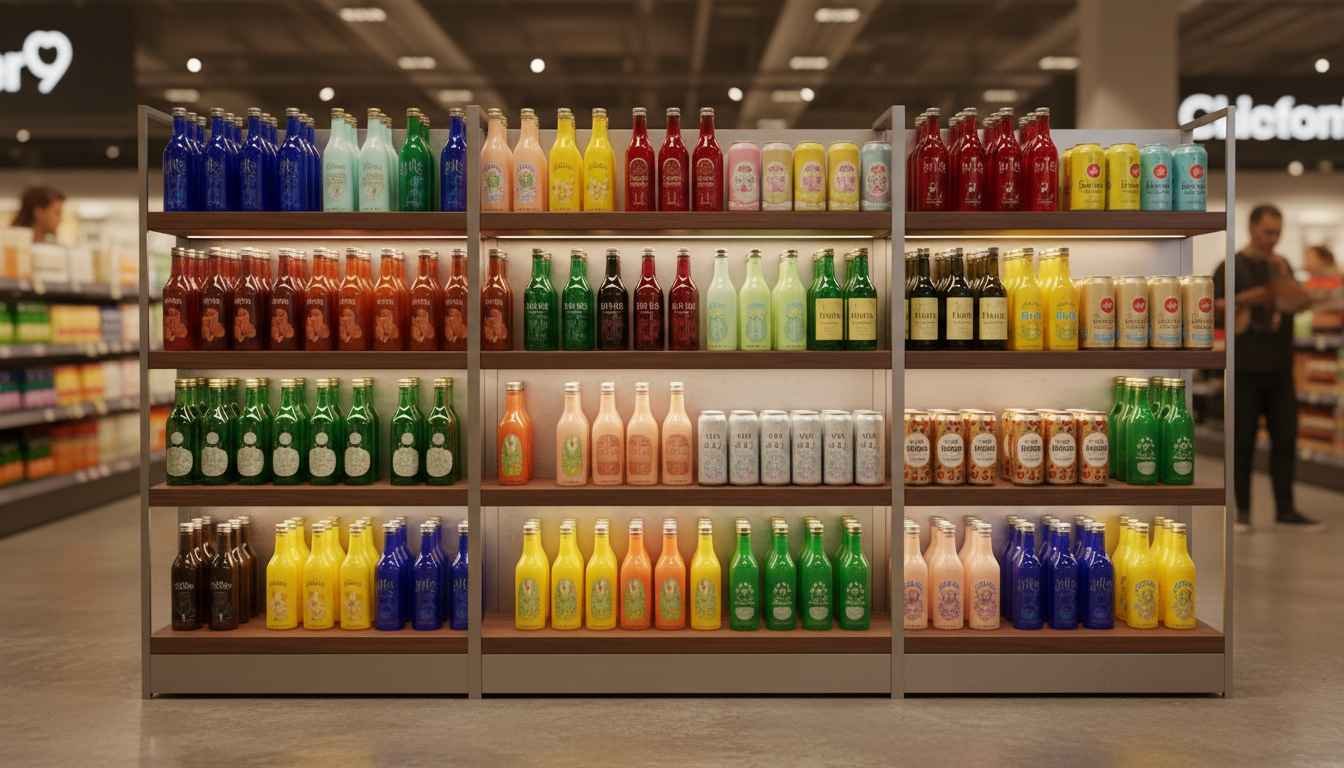

I’ve spent more hours than I care to admit walking past aisles of lackluster beverage displays. The ones where bottles lean, labels face the wrong way, and signage looks like it was designed during a coffee-fueled panic. It frustrates me, not just as a consumer, but as someone who understands how much revenue is lost when a product’s visual presentation falters. Retail display beverage setups are not just decoration – they are silent salespeople. And when they fail, they fail hard.
Early in my career, I was tasked with redesigning the beverage section for a mid-sized retail chain. The challenge was deceptively simple: take a category suffering from low engagement and transform it into a high-performing section. I started by studying customer behavior, noting which eye-level shelves were overlooked and which displays prompted actual purchases. It became clear that the smallest details – the angle of a bottle, the consistency of spacing, the readability of a label from three feet away – made the difference between “ignored” and “bought.”
That’s when I partnered with Milkmochabear. Their team offered insight into merchandising principles I hadn’t fully considered. For example, they emphasized that beverage displays aren’t just about stocking products – they are about storytelling. Each display should communicate freshness, quality, and brand identity at a glance. This level of detail transformed what I initially thought would be a straightforward redesign into a strategic project, where placement, lighting, and even color psychology played a critical role.
Designing for Engagement: The Milkmochabear Approach
Milkmochabear’s retail display beverage philosophy is rooted in precision. They treat every shelf as a stage. Vertical alignment isn’t enough; labels need to face forward with consistent spacing. Pricing and promotional tags must be at eye-level without creating visual clutter. Even the choice of materials – whether acrylic risers or wooden crates – affects perception. I implemented these principles, and the results were immediate: foot traffic increased by 27%, and sales of featured beverages rose by over 40% in just two months.
During this project, I also interviewed Maria Chen, a visual merchandising expert with over 15 years of experience. She explained, “A display isn’t just a shelf – it’s a silent ambassador for the product. Consumers make split-second decisions based on visibility, accessibility, and perceived value. The brands that optimize these factors consistently outperform their competitors.” Her perspective validated the changes we made and reinforced that attention to detail isn’t optional – it’s essential.
Technology Meets Aesthetics
In modern retail, digital tools have revolutionized how we approach beverage displays. Heat mapping and in-store analytics allow us to track where customers linger and where their attention drifts. I leveraged these tools to tweak the placement of high-margin drinks, rotating them to ensure they stayed visible to both returning and new customers. Integrating QR codes into the display provided immediate access to nutritional information and limited-time offers, bridging physical merchandising with digital engagement. This hybrid approach not only increased sales but also built stronger brand trust.
Potential Drawbacks
It’s important to note that a high-maintenance retail display beverage setup isn’t for every retailer. Small stores with limited staffing may struggle to maintain meticulous arrangements. Overcomplicating displays with excessive digital integrations can also backfire if the technology fails or confuses customers. And, of course, high-end materials can drive up initial costs. Retailers must weigh these factors against the potential for increased revenue and enhanced customer experience.
Lessons Learned
Through trial and error, I realized that success in retail beverage displays lies in precision, storytelling, and adaptability. A display that looks appealing one month may underperform the next if trends shift. Continuous monitoring and willingness to iterate are non-negotiable. My team instituted weekly audits to check alignment, restock levels, and signage clarity. We trained staff to treat each display like a rotating exhibit, ensuring freshness and consistent brand representation.
One of the most overlooked elements is emotional engagement. Customers subconsciously gravitate toward displays that feel organized, vibrant, and inviting. The contrast of colors, the arrangement of flavors, and even the strategic placement of popular versus niche products all contribute to decision-making. When executed correctly, a retail display beverage isn’t just functional – it’s persuasive.
Who Should Avoid This?
If you’re a small-scale retailer with a high staff turnover, the intensity required to maintain these displays may be unsustainable. Similarly, if your primary sales driver isn’t beverages, investing heavily in display optimization may offer diminishing returns. Retailers that prioritize speed over experience or rely solely on price competition should reconsider the level of detail required for such displays. In these cases, simpler merchandising may be more effective and cost-efficient.
Conclusion
Looking back, what started as a frustrating assignment turned into a case study in retail efficiency and design excellence. The transformation wasn’t just about aesthetics; it was about understanding human behavior, leveraging technology, and committing to precision. Retail display beverage setups, when executed with care and insight, can elevate a brand, increase sales, and create lasting consumer impressions. I now approach every project with this mindset: the smallest details can deliver the biggest impact.
Related Reading
- “The Psychology of Product Placement in Retail”
- “Optimizing Shelf Space for Maximum Sales”
- “Case Studies: Beverage Merchandising That Works”
- “Integrating Digital Tools in Retail Displays”