
You land in Dublin, rent a car, and within two hours the motorway gives way to green fields, stone walls, and a coastline that looks too dramatic for somewhere this close to a capital city. Ireland’s south east — the counties of Kilkenny, Wexford, Waterford, and Carlow, the heart of what’s marketed as Ireland’s Ancient East — packs medieval cities, Viking history, and wild coastal scenery into a compact, easy-driving region. These are the places to visit in south east Ireland that are genuinely worth your time.
1. Kilkenny: the Marble City
Kilkenny is the south east’s prettiest city and its best base. The 12th-century Kilkenny Castle dominates the river, and the Medieval Mile walking trail links it to St. Canice’s Cathedral — where you can climb the 9th-century round tower for views over the rooftops — plus Rothe House and Smithwick’s Experience, Ireland’s oldest brewery. The city’s lanes are full of craft shops, traditional pubs, and a food scene that punches well above its size. Stay at least one night; Kilkenny after dark, when the day-trippers leave, is the real thing.
2. Waterford: Viking Triangle and Crystal
Ireland’s oldest city, founded by Vikings in 914, wears its history in the compact Viking Triangle: Reginald’s Tower, the Medieval Museum, and the 15th-century Choristers’ Hall sit within a few streets. The House of Waterford Crystal tour shows master craftsmen cutting the crystal the city is famous for — book ahead, as tours fill up. From the quays, the Suir river gives the city a working-port character you won’t find in the more polished tourist towns.
3. Hook Peninsula and Hook Lighthouse
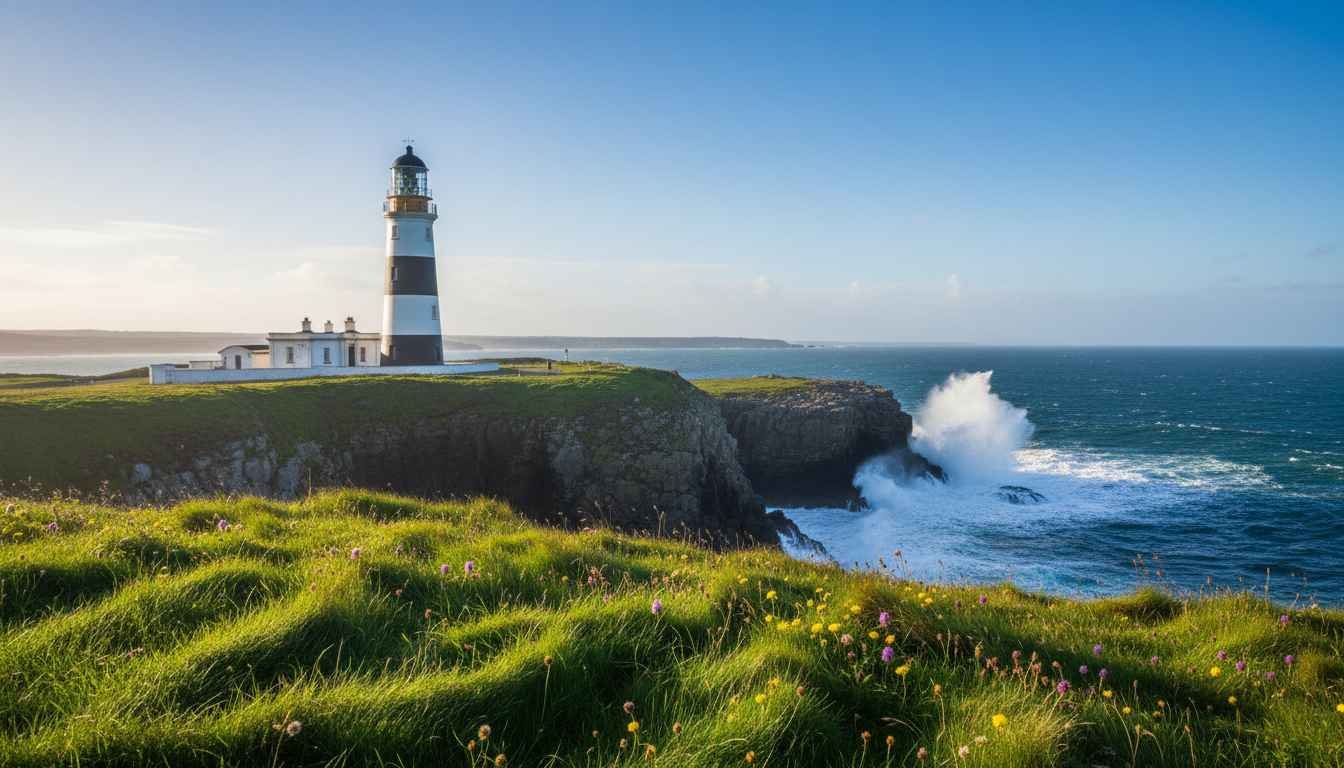
The Hook Peninsula in County Wexford ends at one of the oldest operational lighthouses in the world, built in the early 13th century by William Marshal. Guided tours climb the tower and tell the story of the monks, knights, and keepers who maintained the light. The peninsula’s cliff walks, coves, and the ruins of Tintern Abbey make this a half-day trip that feels like the edge of the world — in the best way.
4. Wexford Town and the Irish National Heritage Park
Wexford town itself offers a lively harbor, a compact medieval core, and the annual Wexford Festival Opera each autumn. Just outside town, the Irish National Heritage Park is one of Ireland’s most underrated attractions: a 35-acre open-air museum walking you through 9,000 years of Irish history, from Stone Age homesteads to Viking longhouses, with costumed guides who make it come alive. It’s the single best rainy-day-proof history stop in the region — and much of it is outdoors under tree cover.
5. New Ross and the Dunbrody Famine Ship
This quiet riverside town holds one of Ireland’s most moving experiences: the Dunbrody, a full-scale replica of an 1840s emigrant ship, moored where the originals departed for America during the Great Famine. The guided tour, told from the perspective of passengers and crew, is genuinely affecting. Nearby, the JFK Arboretum — dedicated to President Kennedy, whose ancestors left from New Ross — covers over 600 acres of gardens and lakes.
6. Curracloe Strand
County Wexford’s coastline hides one of Ireland’s great beaches: Curracloe’s long sweep of soft sand backed by dunes starred in films like Saving Private Ryan (as Omaha Beach) and Brooklyn. Come on a sunny summer day and you’ll wonder why more people don’t know about it; come on a wild winter one and you’ll have the elemental drama to yourself. The nearby Raven Nature Reserve adds forest trails and birdwatching.
7. Carlow: Brownshill Dolmen
Inland County Carlow is often skipped, which is exactly why the Brownshill Dolmen is worth the detour: a 5,000-year-old portal tomb whose capstone — estimated at over 100 tonnes — is among the heaviest in Europe. It stands in a quiet field, free to visit, with no crowds and no gift shop. Ten minutes that connect you to Ireland’s deep past better than any museum case.
8. Dunmore East
This working fishing village on Waterford’s coast is the south east in miniature: a pretty harbor, cliff walks in both directions, seafood restaurants serving the day’s catch, and blue-flag beaches at nearby Counsellors and Portally. It’s the kind of place travelers stumble on and wish they’d found sooner — consider it for a slow afternoon between Waterford and the Hook Peninsula.
Practical Tips for South East Ireland
Fly into Dublin and drive — most of the region is 1.5 to 2.5 hours from the airport, and a car is essential outside the cities. May through September brings the best weather and longest days; July and August are busiest. The 46-kilometer Waterford Greenway, a converted railway line from Waterford city to Dungarvan, is one of Ireland’s great cycling days and easily rented. Tourism Ireland (ireland.com) keeps current opening hours and driving routes for the region’s heritage sites. If the south east is part of a bigger island itinerary, our best places to visit in Europe in summer guide helps place it in a wider trip.
FAQ
How many days do I need in south east Ireland?
Three to four days covers it well: a day each for Kilkenny, Waterford, and Wexford/Hook Peninsula, with the fourth for New Ross, the Greenway, or simply slowing down. It’s an easy add-on to a week in Ireland.
Is the south east of Ireland good for families?
Yes — the Heritage Park, Dunbrody ship, beaches like Curracloe, and the Waterford Greenway are all strong family picks, and driving distances between stops are short.
What’s the best base for exploring the region?
Kilkenny for atmosphere and food, Waterford city for centrality. Both have good accommodation and put the whole region within an hour’s drive.
Final Thoughts
South east Ireland doesn’t shout. It doesn’t have the Cliffs of Moher’s crowds or Dublin’s buzz — and that’s precisely its charm. What it offers instead is a denser, quieter kind of Ireland: a 13th-century lighthouse still doing its job, a famine ship you can walk through, medieval streets you can have nearly to yourself on a weekday morning. Give it three days, drive slowly, stop for the brown tourist signs, and you’ll understand why the people who know Ireland best keep coming back to this corner of it.