

Let’s be honest first: Delhi in summer is hot. May and June regularly push past 40°C (104°F), and the afternoons can feel like standing in front of an open oven. But here’s the local secret — summer is also when Delhi is at its most itself: mango season, uncrowded monuments at dawn, long golden evenings on the lawns of India Gate. The trick isn’t avoiding Delhi in summer. It’s knowing where to be, and when.
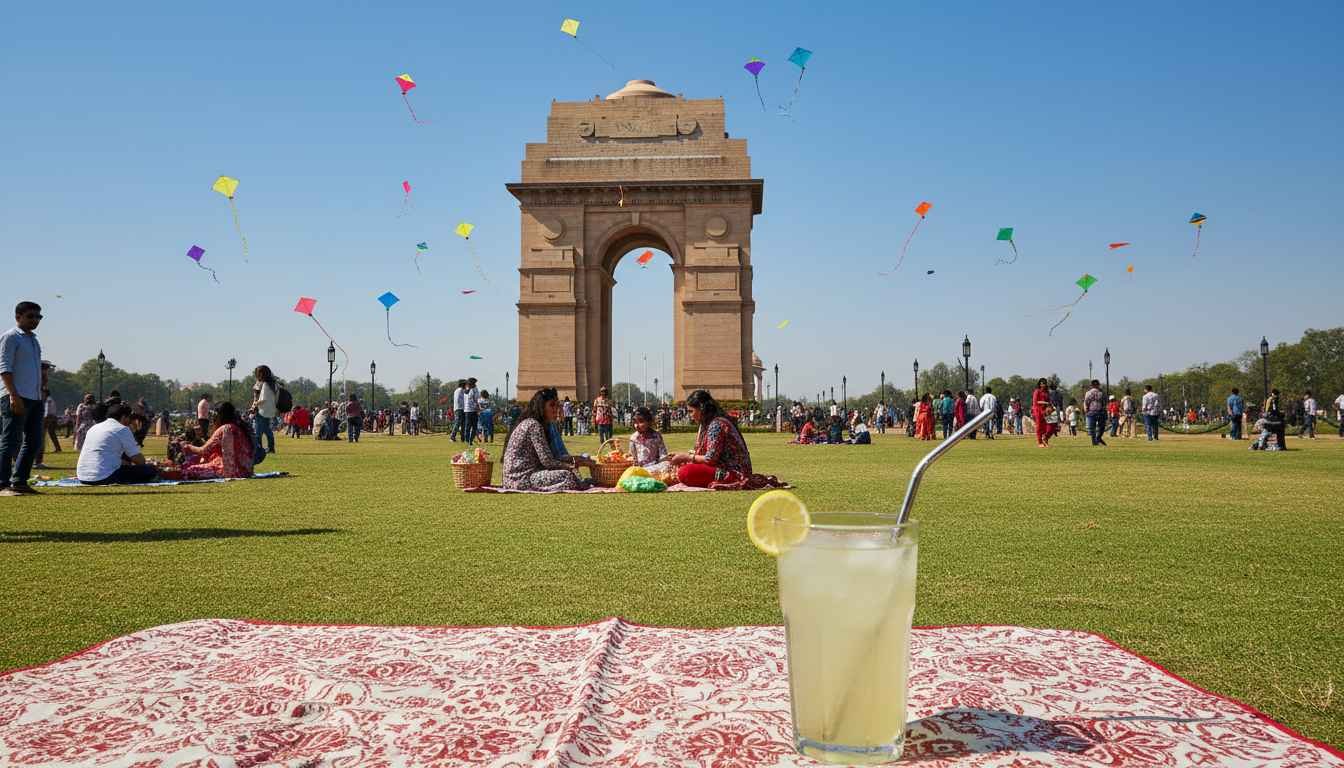
The best place to visit in Delhi in summer isn’t a single spot — it’s a strategy: monuments at sunrise, gardens and museums in the heat of the day, and the city’s great open spaces in the evening. Here’s the playbook.
Humayun’s Tomb: Go at Opening Time
The great Mughal garden-tomb that inspired the Taj Mahal is at its best in the first hour after opening. Arrive at sunrise and you’ll have the red sandstone and white marble nearly to yourself, with the charbagh gardens still cool and the light doing extraordinary things to the dome. This UNESCO World Heritage site rewards the early riser more than almost anywhere else in Delhi — by 10 a.m. the stone radiates heat.
Lodhi Gardens: Delhi’s Morning Ritual
Every summer morning, thousands of Delhiites do the same thing: walk, jog or do yoga in Lodhi Gardens before the heat arrives. Join them. The 90-acre park — tombs from the Lodhi era scattered among ancient trees — is the city’s green lung, and the canopy keeps it several degrees cooler than the streets outside. Come between 6 and 8 a.m., then breakfast at one of the cafes on the park’s edge.
Qutub Minar: Another Dawn Patrol
The 73-meter victory tower and its surrounding archaeological complex — another UNESCO site — follow the same rule as Humayun’s Tomb: early or not at all in summer. The iron pillar that famously doesn’t rust, the Quwwat-ul-Islam mosque, and the tower itself are all best explored before 9 a.m. The complex’s lawns are a fine picnic spot in the cooler months, but in summer, treat it as a morning mission.
India Gate: Delhi’s Great Summer Evening
If mornings belong to the monuments, evenings belong to India Gate. As the sun drops, the lawns around the war memorial fill with families — kite-flying, picnics, ice-cream vendors doing brisk business. The memorial itself is floodlit after dark, and the atmosphere is pure Delhi: chaotic, joyful, and completely free. This is the single best free evening in the city in summer.
The Lotus Temple: Air-Conditioned Serenity
The Bahá’í House of Worship — the famous lotus-shaped temple — offers something rare in a Delhi summer: profound quiet and cool air. The marble interior is calm and contemplative regardless of your faith, and the surrounding pools and gardens are lovely at golden hour. Note that it’s closed on Mondays, so plan around that.
Dilli Haat: Crafts, Food and Shade
When the afternoon heat peaks, head for Dilli Haat — the open-air crafts market where artisans from across India sell textiles, pottery and jewelry, and the food stalls serve regional dishes from a dozen states. Go for a late lunch: the shaded walkways and misting fans make it bearable, and a thali followed by kulfi is the correct summer order of operations. Bargaining is expected but keep it friendly.
Garden of Five Senses: The Sensory Escape
Tucked into Saidul Ajaib in South Delhi, the Garden of Five Senses is twenty acres of landscaped gardens, water features and art installations designed to be experienced slowly. It’s at its best in the late afternoon as the heat eases — the misting fountains and shaded amphitheater seating make it one of the city’s most underrated summer refuges.
Khan Market and Connaught Place: Air-Conditioned Retail Therapy
Some summer afternoons are simply for being indoors, and Delhi does indoor well. Khan Market — the city’s most storied shopping street — pairs bookshops and boutiques with excellent lunch spots. Connaught Place’s colonnades offer shade and its inner-circle restaurants offer some of the city’s best air-conditioning. Nobody will judge you for spending 2 to 5 p.m. in a cool cafe with a cold coffee. That’s what the locals do.
How to Handle Delhi’s Summer Heat
A few non-negotiables: carry water everywhere and drink before you’re thirsty — dehydration sneaks up fast. Wear light cotton, a hat and sunscreen. Plan outdoor sightseeing for before 10 a.m. and after 5 p.m., with the middle of the day for museums, malls and naps. Eat light and fresh — it’s mango season (Alphonso, Dasheri, Langra), and Delhi’s mango vendors are a highlight in themselves. For official travel guidance, Incredible India, the government’s tourism portal, is the authoritative starting point. And if the heat has you dreaming of the hills, our guide to the best places to visit in Rishikesh covers the classic Himalayan foothill escape — or trade the city for the coast with our places to visit in Vasco da Gama, Goa guide.
FAQ
- Is it worth visiting Delhi in summer?
Yes, with the right strategy. Monuments are uncrowded at dawn, hotel prices drop, it’s mango season, and the evenings — especially around India Gate — are genuinely magical. Just respect the heat. - What should I wear in Delhi in summer?
Light, loose cotton clothing, a hat, sunglasses and comfortable walking shoes. Modest dress (covering shoulders and knees) is expected at religious sites. - How hot does Delhi get in summer?
May and June regularly exceed 40°C (104°F), with hot, dry winds. July brings monsoon relief but high humidity. Early mornings and late evenings remain pleasant throughout.
Final Thoughts
Delhi in summer asks something of you — an early alarm, a water bottle, a willingness to slow down at noon. What it gives back is a city without the crowds: dawn at the great tombs, mangoes for breakfast, and those long, golden, kite-filled evenings at India Gate. Follow the sun’s schedule instead of fighting it, and summer Delhi might just be your favorite Delhi.