

You look out at a patchy lawn — thin in the shade, bare where the children play, weedy along the edges — and you want it fixed this season, not next year. That is the appeal of black beauty sod: turf, already grown, laid down in a day, green by the weekend. It can absolutely deliver that transformation, but only if the ground underneath is prepared properly and the first weeks of watering are taken seriously. Sod is not a shortcut around soil; it is a head start on top of it.
Black Beauty is sold as a turf-type tall fescue blend, a grass family chosen for deep green colour, density and tolerance of sun and partial shade. This guide covers what it is, how to lay it well, how to keep it alive through its first season, and where its limits are — so you buy it for the right lawn, not just the prettiest photograph.
What Black Beauty Sod Is — and Is Not
Tall fescue is a cool-season grass: it grows most actively in spring and autumn, stays green through mild winters in many regions, and can go dormant and brown in severe summer heat or drought, recovering when water and cooler weather return. That matters for expectations. A tall fescue lawn is a strong choice for temperate climates and for lawns that get a mix of sun and light shade; it is a weaker choice for deep, all-day shade or for the hottest southern climates, where a warm-season grass may suit better. Check your local cooperative extension guidance for your area before ordering — regional advice beats any national product page.
Density is the blend’s real selling point. A thick, well-rooted sward crowds out weeds, stands up to foot traffic better than a thin lawn, and feels soft underfoot. But density comes from the roots as much as the blades: sod that is laid on compacted, unprepared soil will look good for a month and struggle thereafter, whatever the variety name on the pallet.
Preparing the Ground: The Step Most People Rush
Start by clearing the old lawn, weeds and debris, then loosen the top few inches of soil and remove stones and large roots. If you can, test your soil — many extension services offer inexpensive testing — because pH and nutrient problems will follow you into the new lawn if you ignore them. Grade the area so water drains away from the house, not toward it, and rake it level, firming soft spots that would later sink under the turf.
Order sod to arrive the day you lay it, not days earlier. Turf dries out and heats up on a pallet, especially in warm weather, so schedule delivery for a morning you can work, keep the rolls shaded and moist if there is any delay, and lay the most exposed rolls first.
Laying the Sod: Seams, Staggering and Edges
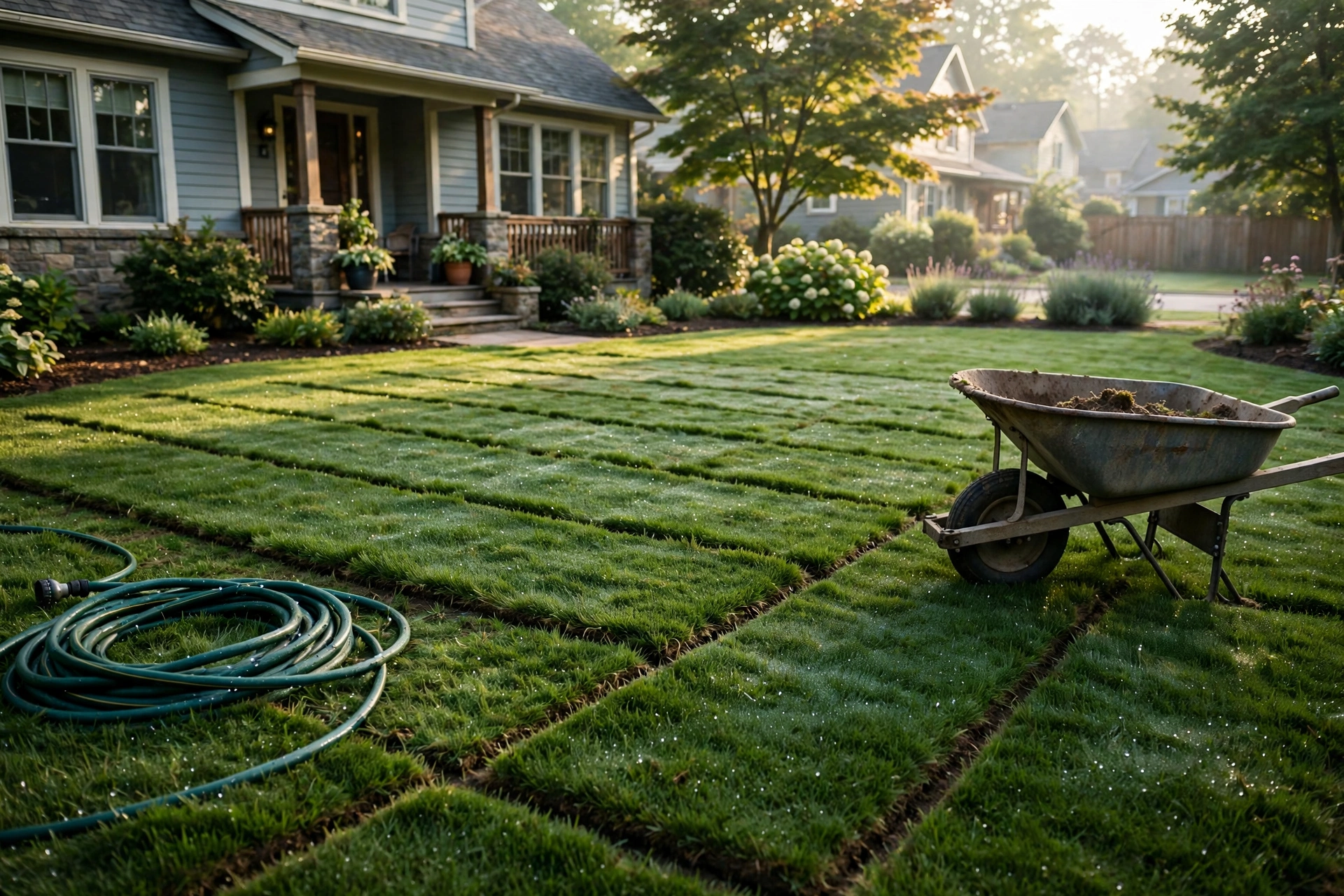
Lay rolls in straight runs, butting the edges tightly together without overlapping or leaving gaps, and stagger the joints like brickwork so seams do not line up. On slopes, lay across the slope rather than down it, and pin the rolls if the ground is steep. Trim edges with a sharp knife for a clean finish around paths, beds and trees, and roll the whole lawn lightly afterward so the turf makes full contact with the soil — air pockets underneath are the most common cause of patchy establishment.
Water immediately and thoroughly after laying, soaking through the sod into the soil beneath. Then keep the turf consistently moist — not waterlogged — for the first two to three weeks while roots knit into the soil. How often that means watering depends on your weather and soil; the test is simple: lift a corner after a week. If roots are reaching into the soil, you are on track. If the underside is dry, water more deeply.
First-Season Care: Mowing, Feeding and Watering
Start mowing once the grass reaches about a third taller than your target height, and never cut more than a third of the blade at once. Tall fescue is typically kept around 3 to 4 inches high; mowing higher shades the soil, keeps roots deeper and helps crowd out weeds, while scalping it invites stress and invasion. Leave clippings on the lawn where practical — they return nutrients and moisture.
Feed modestly and seasonally rather than heavily and often: a balanced lawn fertiliser in the main growing seasons, applied at the labelled rate, beats guesswork. Water deeply and less often once established, encouraging deep roots, rather than with light daily sprinkles that keep roots shallow. If a section thins, overseed it in early autumn with a matching tall fescue seed rather than replacing whole rolls — patch repair is cheaper and usually enough. For wider home projects around the lawn, our home improvement services guide and superior home services guide cover the kind of work that often surrounds a garden refresh.
Cost, Limits and Honest Expectations
Sod costs more upfront than seed, and the total depends on your area, the size of the lawn, delivery distance and whether you lay it yourself or hire installers — get itemised quotes per square metre or square foot, delivered and laid separately, before comparing suppliers. What you buy with that premium is time: an instant lawn and weeks, not months, of establishment.
Be honest about the limits. Sod will not fix deep shade, poor drainage or a soil problem you skipped, and no lawn — sod or seed — stays perfect without mowing, watering and occasional feeding. If your lawn is mostly deep shade under mature trees, consider shade-tolerant ground cover or redesigned beds instead of fighting the site with turf.
FAQ: Black Beauty Sod
How quickly can I walk on new sod?
Light foot traffic is usually fine after the first week or two, once roots begin to grip — but keep heavy play, pets and furniture off it for several weeks until it is firmly rooted.
How often should I water new sod?
Keep it consistently moist for the first two to three weeks, then move to deeper, less frequent watering. Your soil and weather decide the exact schedule; check by lifting a corner to see root growth.
How high should I mow tall fescue?
Typically around 3 to 4 inches, cutting no more than a third of the blade at a time. Taller mowing keeps roots deeper and helps the lawn resist weeds.
Is black beauty sod good for shade?
It tolerates partial shade better than many grasses, but it will thin in deep, all-day shade. For those spots, consider ground cover or garden beds instead.
Final Thoughts
Black beauty sod earns its reputation when it is treated as a living lawn, not a carpet: prepare the soil, lay it tightly, water it deeply through establishment, and mow it high. Do that, and you get what the photograph promised — a dense, deep-green lawn, this season, that actually lasts.