

You are standing in the skincare aisle, or scrolling through it, and every second bottle seems to promise a breakthrough. One label catches your eye: it talks about particles too small to see, delivering ingredients deeper into your skin. That is the basic pitch behind the “nano shape of beauty” — skincare built around nanotechnology. Before you buy into the promise, it helps to understand what the term actually means, what it can and cannot do, and how to judge a product that uses it.
What Is the Nano Shape of Beauty?
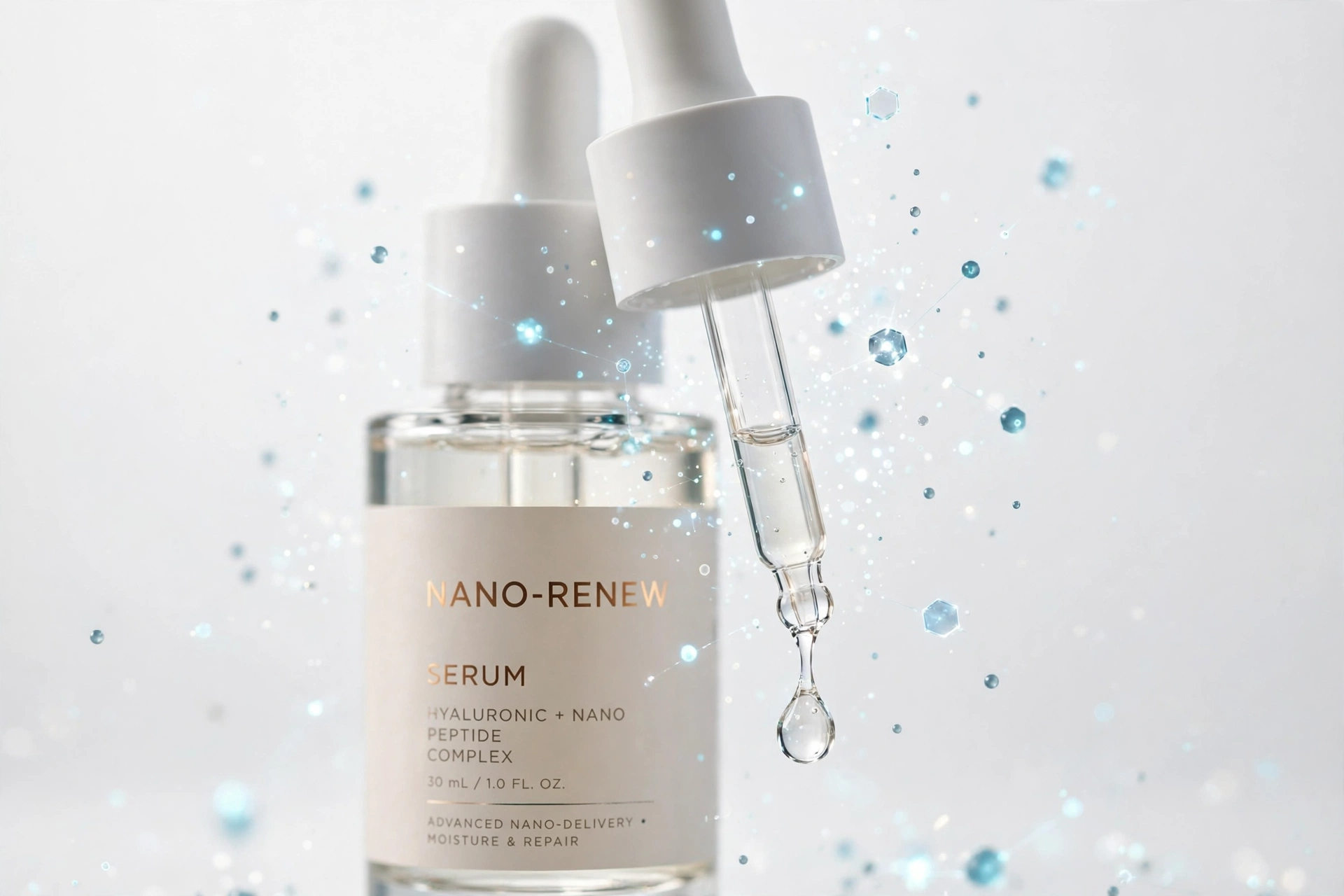
In skincare, nanotechnology usually means formulating active ingredients into extremely small carriers — often described as liposomes, nanoemulsions, or solid lipid nanoparticles — measuring roughly 1 to 100 nanometres. A nanometre is one-billionth of a metre, far smaller than a skin cell. The idea is that a smaller carrier may spread more evenly, feel lighter on the skin, and release its contents more gradually than a conventional cream.
That is a formulation technique, not a single ingredient and not a guarantee of results. Two products can both use the word “nano” and work very differently, because what matters is the ingredient inside the carrier, how stable the formula is, and whether it suits your skin. A nano-encapsulated vitamin C, for example, is still vitamin C: its benefits and its irritation potential come from the ingredient itself, not from the size of its packaging.
How Nano Carriers Are Supposed to Work
Conventional moisturisers mostly sit on the skin’s surface, where they reduce water loss and soften the outer layer. Nano carriers are designed to do a little more: their tiny size and oil- or water-compatible shells may help an ingredient stay dispersed in the formula, resist breaking down in light or air, and release slowly over hours rather than all at once.
In practice, most of this action still happens in the outermost layer of skin, the stratum corneum, which is a formidable barrier by design. Claims that a cream “penetrates to the deepest layers” should be treated with scepticism unless the brand publishes proper evidence. Healthy skin is meant to keep most things out, and a product that genuinely reached living tissue in large amounts would be closer to a drug than a cosmetic.
Where Nano Skincare Shows Up Most
You will most often meet nanotechnology in sunscreens, serums, and anti-ageing creams. In sunscreens, mineral filters such as zinc oxide and titanium dioxide are sometimes milled to nano size so the product spreads clear instead of leaving a white cast. In serums, liposome-style carriers are used for ingredients that are otherwise unstable, such as certain forms of vitamin C and retinol. In hair and colour products, nanoemulsions can create a lighter, less greasy feel.
When you are shopping, look past the word “nano” to the full ingredient list. A skincare routine built around retinol still depends on the retinol concentration, the other ingredients, and how often you use it — the delivery system is only one part of that story. The same applies to any beauty product you are considering buying: authenticity, expiry, and ingredient transparency matter more than a single buzzword on the front of the bottle.
Is Nano Skincare Safe?
This is the question regulators have spent the most time on, and the honest answer is that safety depends on the specific nanomaterial, its size, its coating, and how you are exposed to it. A particle in a rinse-off cleanser raises different questions from the same particle in a leave-on face cream or a spray you might inhale.
In the United States, the Food and Drug Administration has issued draft guidance on the safety assessment of nanomaterials in cosmetic products, noting that properties can change at the nanoscale and that safety testing should account for particle size, impurities, and routes of exposure. In the European Union, cosmetic products containing nanomaterials face notification requirements, and ingredients present in nano form are generally labelled with “(nano)” after the ingredient name. That labelling rule is one practical reason to read the back of the bottle, not just the front: in the EU, you can often see for yourself whether a nano ingredient is present.
If you have sensitive skin, eczema, or a damaged skin barrier, be extra cautious with any new active product, nano or not. Patch-test on a small area first, introduce one new product at a time, and stop if you develop persistent redness, itching, or flaking. Sunscreen sprays deserve particular care: avoid inhaling any spray product directly, and apply it in a well-ventilated space.
How to Judge a Nano Beauty Product Before You Buy
- Read the ingredient list, not the headline. The named actives, their position in the list, and the presence of fragrance or alcohol tell you more than “nano” does.
- Ask what the carrier actually carries. A brand that cannot say which ingredient is encapsulated, and why, is selling a word rather than a formula.
- Be wary of absolute promises. “Erase wrinkles,” “reverse ageing,” and “guaranteed glow” are marketing claims, not measured outcomes. Look for realistic language about hydration, texture, and appearance over weeks of consistent use.
- Check the packaging and expiry. Airless pumps and opaque bottles protect unstable ingredients better than wide jars. Note the period-after-opening symbol and discard products past it.
- Match the product to your skin, not the trend. Oily skin often prefers light nanoemulsions; dry skin may still need a richer cream on top. One delivery system does not suit every skin type.
What Nano Skincare Cannot Do
It cannot change your skin type, replace sunscreen, or undo years of sun damage on its own. It cannot make an ingredient work if that ingredient is present in a negligible amount, and it cannot make an irritating formula gentle simply by shrinking its particles. If a product promises results that sound medical — treating disease, restructuring skin, or working overnight — treat that as a warning sign, not a selling point, and consider speaking to a dermatologist instead.
FAQ: Nano Shape of Beauty
Does “nano” on a label mean the product is more effective?
Not necessarily. It describes particle size or a delivery method. Effectiveness still depends on the ingredient, its concentration, the formula’s stability, and consistent use.
Are nano sunscreens safe?
Regulators assess nano mineral filters case by case, and the main caution concerns inhalation of sprays and powders rather than lotions applied to skin. Follow the product directions and avoid breathing in spray products.
How can I tell if a product contains nanomaterials?
In the EU, nano ingredients are generally marked “(nano)” in the ingredient list. Elsewhere, look for terms such as liposome, nanoemulsion, or nanoparticle, and ask the brand for specifics if the label is vague.
Final Thoughts
The nano shape of beauty is best understood as a smarter way of packaging ingredients, not as a miracle in a bottle. Used well, nano carriers can make a formula feel lighter, stay stable longer, and release its actives more evenly. Used as a buzzword, the same term can dress up an ordinary cream at a premium price. Shop by ingredient list, evidence, and your own skin’s response — and let the word “nano” inform your decision, not make it for you. For background on how regulators think about these products, see this summary of the FDA’s draft guidance on nanomaterials in cosmetics.