

You step onto the sand, the kids are already running toward the water, and you realise the sunscreen is still in the car, the spare nappy is at the hotel, and nobody has a towel. A beach day with children is wonderful, but only when the bag you carry actually matches the day you are about to have. Packing well is not about bringing everything you own. It is about bringing the right things, in the right order, so that nobody has to leave the beach early.
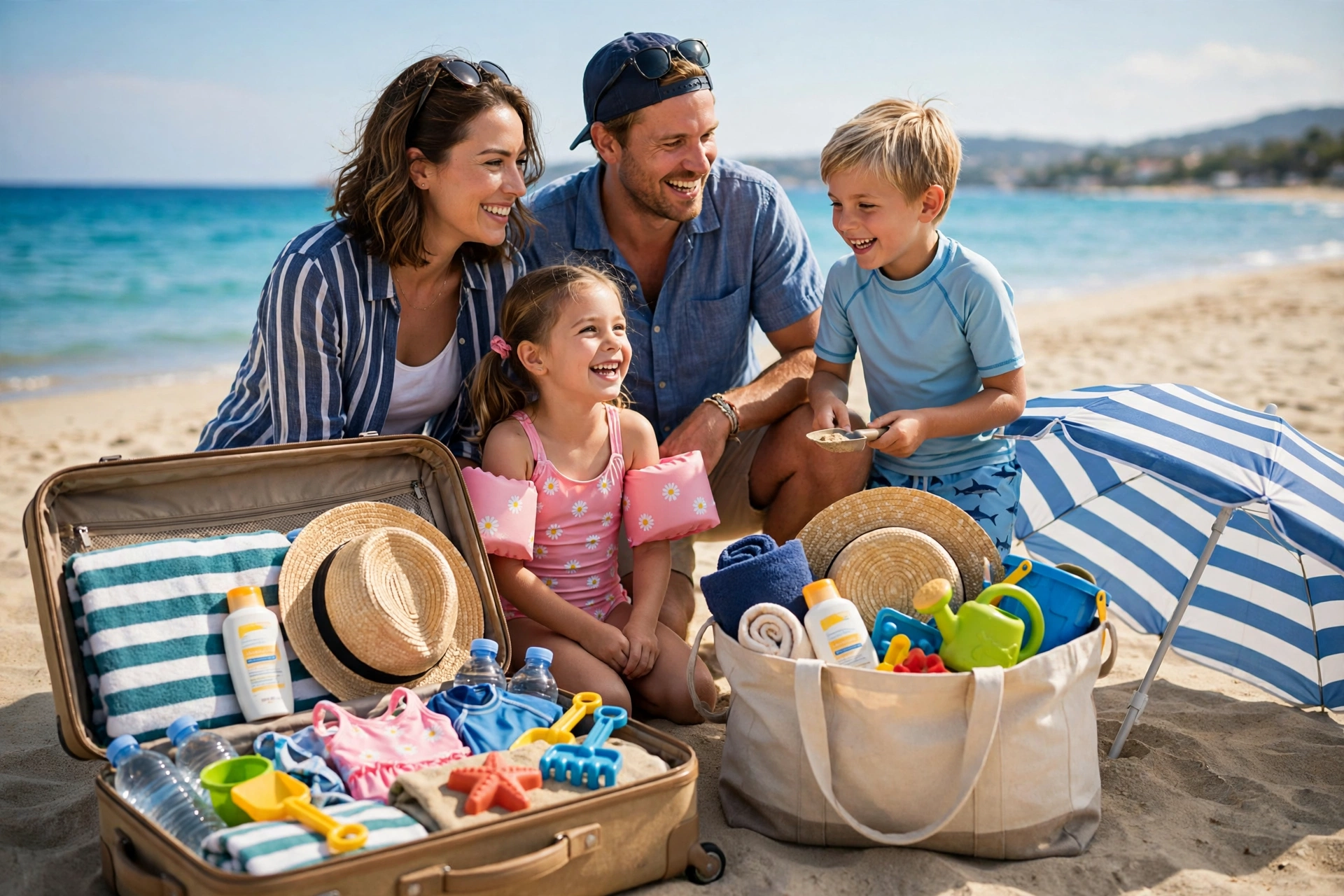
This guide gives you a complete, practical checklist for a beach vacation with kids: the beach bag, sun and swimming, food, entertainment, and what you can leave behind.
The Packing Principle: One Bag for the Beach, One Bag for the Rest
The single most useful trick is to pack two bags. The first is your beach bag, which goes everywhere with you: towels, sunscreen, water, snacks, hats, and a change of clothes. The second stays at your accommodation and holds spares, laundry, and anything you only need once a day.
This separation matters because a beach bag that is too heavy gets left behind, and a beach bag that is too light sends you back to the hotel halfway through the morning. Before you leave each day, do one quick check: sun protection, water, food, swimwear, a dry change, and something to play with. If those six are covered, the day will work.
Start With the Beach Bag Essentials
A good beach bag is large, easy to carry, and happy to get sandy. A mesh bag or a tote that shakes clean is better than a smart bag you worry about ruining. Inside it, pack one towel per person plus one spare for the youngest child, who will almost certainly need it.
Add a waterproof pouch for your phone, keys, and wallet, because sand and salt water damage electronics quickly. A couple of zip-lock bags are surprisingly useful: one for wet swimwear on the way home, and one for anything that must stay dry.
Sun Protection That Actually Works for Kids
Sun protection is the one area where preparation genuinely matters, and it is worth getting right before you reach the beach. Pack a broad-spectrum sunscreen suitable for children, and apply it before you leave, not when you are already in the sun. Reapply after swimming and towelling off, following the instructions on the product label, because water and sand remove sunscreen faster than most parents expect.
Hats with a wide brim protect faces, ears, and necks far better than a cap alone, and sunglasses designed for children protect young eyes on bright days. For toddlers and children who burn easily, a long-sleeved swim top (rash guard) is one of the best items you can pack: it stays on in the water and reduces how much skin is exposed at all.
Swimwear and Clothing: Pack Less, Pack Smart
Children do not need a new outfit for every day of a beach holiday. They need two or three swimsuits each, so one can dry while another is worn, plus light, loose clothing for the walk to and from the beach. T-shirts, shorts, and a sundress or two are enough, and everything should be easy to wash and quick to dry.
Pack one warm layer per child, even in summer. Evenings by the sea can turn cool, and air-conditioned restaurants and cars feel cold after a hot beach. Shoes matter too: sandals or water shoes that can get wet are ideal for the beach, while one pair of comfortable walking shoes covers everything else.
Food, Drink, and Snacks for a Beach Day
Hunger arrives fast at the beach. Swimming, running, and digging use up a lot of energy, and children who are hungry become tired and unhappy quickly. Pack more water than you think you need, in bottles each child can open themselves, and keep them in the shade so they stay cool.
For food, choose things that travel well in heat: sandwiches, fruit, crackers, cheese, and yoghurt tubes kept in a small cool bag with an ice pack. Avoid anything that spoils quickly in the sun, and keep food covered so sand stays out of it. If you want ideas beyond the usual sandwiches, this guide to best beach snacks for kids looks at what actually works on a hot beach day, from mess management to keeping food safe in the heat. Finally, pack wipes and tissues. They clean sandy hands before eating, sticky faces after eating, and just about everything else in between.
Beach-Day Entertainment Without Overpacking
You do not need a suitcase of toys. A bucket and spade, a ball, and a couple of floats will keep most children happy for hours, and the beach itself does most of the entertaining. Older children often enjoy a snorkel set, a frisbee, or a simple kite, while younger ones are usually happiest digging, splashing, and building.
If you are looking for structured ideas for a full day by the sea, these exciting kids activities in Oceanside show how a family beach day can mix play, exploring, and downtime without needing to buy anything new.
The Safety, Health, and Comfort Kit
A small first-aid and comfort kit takes up very little space and saves many beach days. Pack plasters, antiseptic wipes, any regular medication your children need, and something for insect bites if you are visiting an area where they are common. If any child has an allergy, carry their medication with you at all times, not in a bag left at the hotel, and make sure another adult in your group knows where it is.
Add a few comfort items that are easy to forget: a dummy or comfort toy for a toddler, a spare change of clothes for accidents, and nappies and wipes if you are travelling with a baby, plus a changing mat. Finally, agree on a simple safety rule before you arrive: children stay where an adult can see them, and everyone knows where your spot on the beach is.
What You Can Leave at Home
Packing well also means knowing what to leave behind. Expensive electronics, jewellery, and anything you would be upset to lose to sand or water should stay at your accommodation. Most beach toys can be bought cheaply at your destination if you forget them, and many hotels and rentals already provide beach towels, umbrellas, and chairs — check before you pack your own.
You also do not need a different outfit for every photograph. A beach holiday is meant to be relaxed, and a smaller bag makes the whole trip easier: easier to carry, easier to keep track of, and easier to pack up at the end of the day when everyone is tired and sandy.
Frequently Asked Questions
How many swimsuits should I pack for each child?
Two or three per child is usually enough for a week-long beach vacation. One can be worn while another dries, and a third covers accidents or an extra swim. If you have laundry facilities, two is plenty.
What is the best way to keep food cool at the beach?
Use a small insulated cool bag with an ice pack, keep it in the shade under your umbrella, and open it only when you need something. Food left out in direct sun warms up quickly, so pack only what you need for that beach session.
Do I really need water shoes for kids at the beach?
Not always, but they are worth packing if your beach is rocky, shelly, or very hot underfoot. They protect small feet, stay on in the water, and save you carrying a child back across hot sand.
Final Thoughts
A beach vacation with kids is not about perfect packing. It is about removing the small problems — sunburn, hunger, thirst, boredom, wet clothes — before they spoil a good day. Pack the beach bag the night before, check the six essentials each morning, and keep the rest simple. Then you can stop thinking about the bag and start enjoying the beach, which is, after all, the whole point of going.