

You have found a hotel that looks perfect in the photos, but then you try to fit five people into it. The beds are too close together, the suitcases block the door, and someone ends up sleeping uncomfortably every night. Choosing a room for a family of five is less about finding the prettiest room and more about checking a few practical details before you book. This guide walks you through those checks, so the room you choose works for everyone in your family, not just on the first night but for the whole stay.
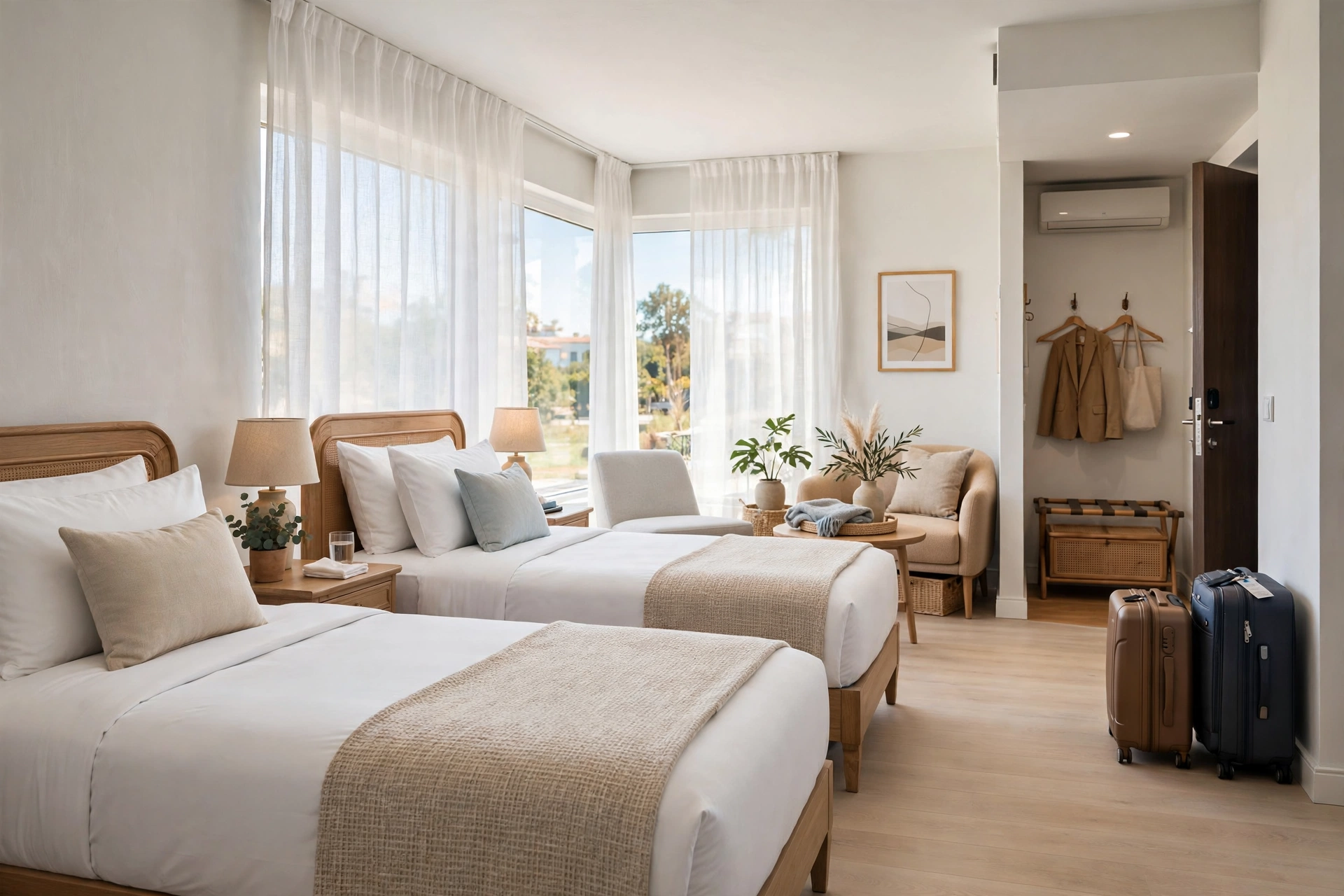
Start With the Occupancy Rule, Not the Room Photo
Before you compare room types, check the maximum occupancy for the room. Many standard rooms are designed for two to four guests, and a family of five may not be allowed in them at all, even if you are willing to squeeze in. Occupancy limits are set by the hotel for safety, comfort, and local rules, and they can vary from one property to another, so do not assume that a room that worked at one hotel will work at the next.
When you search, enter all five guests, including children and infants, in the booking form. Some booking sites only show rooms that officially allow your party size, which saves you from a surprise at check-in. If a room says “sleeps four” and you are five, move on or ask the hotel directly whether an extra bed or a different room type is available, and get the answer in writing.
Room Types That Actually Work for Five
For a family of five, a few room types are usually worth shortlisting first:
- Family rooms. These are designed for larger groups and often include a double bed plus single beds, a sofa bed, or a bunk arrangement. Ask exactly how many people the room sleeps, not just how many beds it has.
- Connecting rooms. Two rooms joined by an internal door give you two bathrooms and real privacy, and they often work better than one crowded room, especially for longer stays.
- Suites and apart-hotels. A separate living area means someone can rest while others watch television or play, and a small kitchenette helps with snacks, breakfast, and storing drinks for children.
- Two standard rooms. Sometimes booking two ordinary rooms costs little more than one large family room and gives you far more space and bathroom time. Compare the total price, not just the per-room price.
The right choice depends on your children’s ages and how long you are staying. A family out sightseeing all day has different needs from one spending rainy afternoons indoors.
Beds, Sleep Arrangements, and Who Sleeps Where
Count sleeping places, not beds. A sofa bed that sleeps one adult comfortably is different from a sofa bed expected to sleep two children, and a single bed is not the same as a twin bed in every hotel’s wording. Ask for the bed sizes and the exact sleeping arrangement: who sleeps where, and whether an extra bed, cot, or rollaway is included or charged separately.
Think about sleep quality, not just headcount. Children who share a bed may sleep badly, and adults on a thin sofa bed for several nights will feel it. If your trip lasts more than a couple of nights, prioritise proper beds over an arrangement that only works for one night. Also check whether a cot for a baby counts toward the occupancy limit.
The Bathroom Test
One bathroom for five people is the most common source of morning stress. Before you book, ask how many bathrooms the room or suite has, and whether the toilet is separate from the shower or bath. A second bathroom can change the whole rhythm of the morning.
Also look for practical details: enough hanging space, room for five people’s toiletries, and a working hairdryer. If you are travelling with young children, a bath rather than only a walk-in shower may matter.
Space to Live, Not Just Sleep
Five people bring five suitcases, five sets of clothes, chargers, toys, books, and snacks. A room that looks spacious empty can feel cramped once luggage is opened. Look for floor space to walk around the beds, a luggage rack or a place to store cases out of the way, and enough wardrobe or drawer space that you are not living out of suitcases for the whole trip.
Packing with space in mind helps too. If your trip involves children, planning what each person really needs keeps the room manageable, and a family packing checklist such as our guide on what to pack for a beach vacation with kids is a useful reminder of how quickly children’s gear adds up.
What to Check Before You Pay
Price comparisons for a family of five need extra care. Check whether the quoted price covers all five guests or only two, with extra-person charges added later. Some hotels charge for a fifth guest, a rollaway bed, breakfast for extra guests, or a cot, and those extras can change which option is actually cheapest.
Read the cancellation terms too. Family plans change, children fall ill, and flights move, so a slightly higher refundable rate can be better value than a strict non-refundable deal. If you are weighing price against comfort, our guide on how to find cheap hotels without sacrificing quality explains where a hotel can be simple without spoiling your stay, and where it should not cut corners. Apply the same test here: a simple room is fine, but one that is too small, too noisy, or short of a proper bed is not a bargain.
Two Rooms vs One: When Splitting Wins
One larger room feels simpler, but two rooms often win in practice. Two rooms give you two bathrooms, two televisions, and a door you can close when children need to sleep early, plus a little privacy for parents. The trade-off is supervision: younger children should not be left alone in a separate room, so connecting rooms are usually better for families with small children.
Compare the options side by side: total price including breakfast and extra-bed charges, total sleeping places, and number of bathrooms. Sometimes the larger room is cheaper and simpler; sometimes two standard rooms cost almost the same and sleep everyone far better. Let those numbers decide, not the room photo.
Questions to Ask the Hotel Before Booking
A short message or call before booking can prevent most problems. Ask:
- What is the maximum occupancy of this exact room type, including children?
- What are the exact bed sizes and sleeping arrangements for five guests?
- Is an extra bed, cot, or rollaway included, and is there a charge?
- How many bathrooms does the room have, and is the toilet separate?
- Are breakfast and other charges included for all five guests?
- Can you confirm the arrangement in writing before I pay?
FAQ:
Can a family of five stay in a standard hotel room?
Sometimes, but only if the room’s official maximum occupancy allows five guests. Always check the occupancy limit and enter all five guests when searching, rather than assuming a standard room will be accepted.
Is a family room or two connecting rooms better?
It depends on your children’s ages and the price. Connecting rooms usually give more space and two bathrooms, while a family room keeps everyone together. For longer stays, the extra bathroom often matters most.
Do hotels charge extra for a fifth guest?
Some do, and some include the charge in the room rate. Check whether the price covers all guests, and ask about extra-bed, breakfast, and cot charges before you compare prices.
Should I book a sofa bed for a child or an adult?
Where possible, give adults the proper beds and let children use the sofa bed or extra bed, especially for stays longer than a night or two. Ask about its size and mattress quality first.
Final Thoughts
Choosing a hotel room for a family of five comes down to a simple order: occupancy first, sleeping places second, bathrooms third, and price last. A room that officially sleeps five, gives everyone a proper place to sleep, and lets the family get ready without queuing for one bathroom will make the whole trip easier. Take ten minutes to ask the right questions before you book, get the arrangement confirmed in writing, and you will arrive knowing the room fits your family.