

You know the feeling. You find a hotel at a price that looks almost too good, you book it in a hurry, and then you arrive to a noisy room, a tired bathroom, and a bed you cannot wait to leave. The trip is still fun, but every night reminds you of the compromise you made. The good news is that a low price and a good stay are not opposites. The trick is knowing where a hotel is allowed to be simple, and where it must not cut corners.
Start With What Quality Means to You
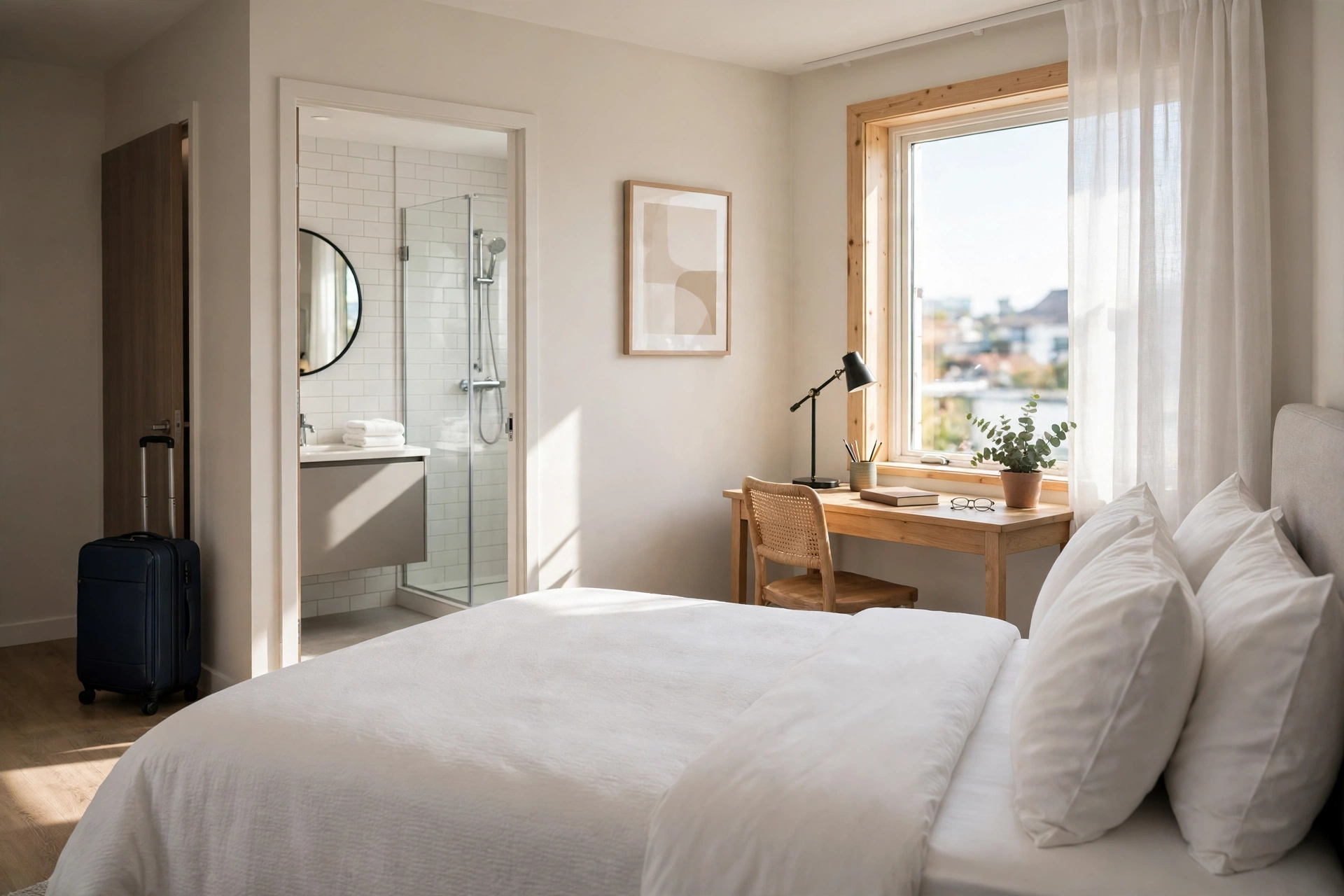
Before you compare prices, write down your non-negotiables. For most travellers, they are simple: a clean room, a comfortable bed, a working bathroom, a safe location, and quiet enough sleep. Everything else — a pool, a gym, a fancy lobby, a breakfast buffet — is a bonus, not a requirement. This short list is what protects you. When you know what you will not compromise on, you can happily give up the extras and still enjoy your stay.
Think about your trip, too: a room where you only sleep needs different things from a room where you plan to work all day.
Be Flexible on Dates, Not on Standards
Prices for the same room can change a lot from one night to the next. Weekends, holidays, local events, and peak seasons push prices up, while quieter midweek nights are often cheaper. If your dates can move by even a day or two, check the nights around your trip before you settle. You are not lowering your standards by travelling on a Tuesday instead of a Saturday — you are buying the same room for less.
If your trip is a short break, it helps to shape the whole plan before you lock in a hotel. Our guide to planning a short city break shows how a loose framework keeps you moving without exhausting you, and the hotel you choose should fit that plan: close enough to what you want to see that you are not spending your savings on transport.
Compare Like With Like, Including the Total Price
A headline price is rarely the full story. Before you decide, check the total you will actually pay: taxes, resort or service fees, parking, breakfast, and cancellation terms. A slightly more expensive room with free cancellation and no added fees can be better value than a cheaper room that charges for everything and cannot be changed.
Compare the same room type, the same dates, and the same cancellation policy across two or three booking options, including the hotel’s own website. Hotels sometimes offer a better rate or free cancellation when you book direct — but not always, so check rather than assume.
Read Reviews the Smart Way
Reviews are useful, but only if you read them for patterns rather than single opinions. One angry review about a rude receptionist and one glowing review about a view tell you very little. Look instead for the same point coming up again and again: cleanliness, noise, bed comfort, water pressure, or helpful staff. Repeated praise or repeated complaints are far more reliable than one extreme review.
Pay attention to recent reviews, because hotels change — a renovation, a new manager, or a change in ownership can transform a place in either direction. Also notice how the hotel responds to criticism. A polite, specific reply suggests a team that cares; silence, or a defensive reply to every complaint, is a warning sign. Finally, read the reviewer’s context: a complaint about a small room means something different from a business traveller than from a family of four.
Location: A Cheap Room in the Wrong Place Costs More
The cheapest room in a city can become the most expensive choice if it is far from everything you came to see. Add up transport fares, travel time, and the energy of long journeys back and forth. A modest hotel in a safe, walkable area near public transport often beats a cheaper hotel on the outskirts, even if the nightly rate is higher.
Check the location on a map, not just in the hotel description. Look for a nearby station or bus stop, places to eat, and a pharmacy or shop within walking distance. If you arrive late, check how you will get from the station or airport to the hotel, and whether the surrounding streets feel comfortable after dark. Location is part of quality, not separate from it.
Look Beyond the Big Chains
Small independent hotels, guesthouses, and family-run places can offer excellent value, especially outside major tourist centres. They often have fewer facilities, but they may make up for it with cleaner rooms, personal service, and local advice you will not get from a large chain. Read their recent reviews carefully, since standards can vary more than at a branded hotel, and confirm the basics before booking: check-in times, payment methods, and what is included.
For a long layover or a few hours between plans, flexible day-use hotel stays can also be worth considering. Paying for the hours you actually need, rather than a full night you will not use, is a practical way to rest properly without paying for an empty room.
Red Flags That Mean You Should Not Book
Walk away, or at least pause, if you see several of these together: no recent reviews at all, photos that show only the lobby and never a real room, vague descriptions that avoid mentioning room size or bathroom type, a cancellation policy you cannot understand, or a total price that keeps changing at checkout. One of these alone may be harmless; several together suggest a hotel that does not want you to know what you are buying.
Before you pay, ask the hotel a simple question if anything is unclear — for example, whether the room has a window, an elevator, or air conditioning. A clear, prompt answer is reassuring. An evasive or missing answer tells you plenty, and it costs you nothing to ask before you commit.
A Simple Checklist Before You Pay
- Does the room meet your non-negotiables: clean, comfortable, quiet, safe?
- Is the total price, including fees, clear — and is the cancellation policy one you can live with?
- Do recent reviews repeat the same strengths, with no repeated complaints about cleanliness or noise?
- Is the location walkable and well connected, with transport and food nearby?
- Do you know exactly what is included — breakfast, Wi-Fi, parking — and what costs extra?
If you can answer yes to most of these, the low price is probably genuine value, not a trap. If you cannot, keep looking. A slightly higher price for a room you will actually enjoy is money well spent.
Frequently Asked Questions
Is the cheapest hotel always the worst choice?
No. A cheap hotel can be excellent if it is clean, well located, and honest about what it offers. Problems come when a low price hides extra fees, a poor location, or rooms that do not match the photos. Judge the total deal, not the headline price.
Should I book early or wait for a last-minute deal?
It depends on your trip. Booking early usually gives you more choice, especially in busy seasons or for popular dates. Last-minute deals can appear, but they are unpredictable and risky if you need a specific location or room type. If your dates are fixed, booking a refundable room early is often the safer value choice.
Are hotel photos trustworthy?
Mostly, but treat them as a starting point. Professional photos show a hotel at its best and may use wide angles. Cross-check with recent guest photos in reviews, look for pictures of the actual room type you are booking, and be cautious if a listing shows no real room photos at all.
Final Thoughts
Finding a cheap hotel without sacrificing quality comes down to one habit: decide what matters, then check it properly. Be flexible on dates, extras, and brand names, but firm on cleanliness, comfort, location, and honest pricing. Read reviews for patterns, compare total prices, and ask questions before you pay. Do that, and a low price stops feeling like a gamble — it becomes a smart choice that leaves you more to spend on the trip itself.