

Picture the hottest afternoon of the year. You walk in from the heat, expecting that rush of cool air, but the house feels sticky, the vents blow barely cool air, and the outdoor unit rattles like it is working twice as hard as it should. That is usually the moment people wonder whether their air conditioner needed attention months ago — and the honest answer is that it probably did.
Keeping your AC healthy comes down to one simple habit: regular professional servicing, done at the right time of year, with a few easy jobs you handle yourself in between.
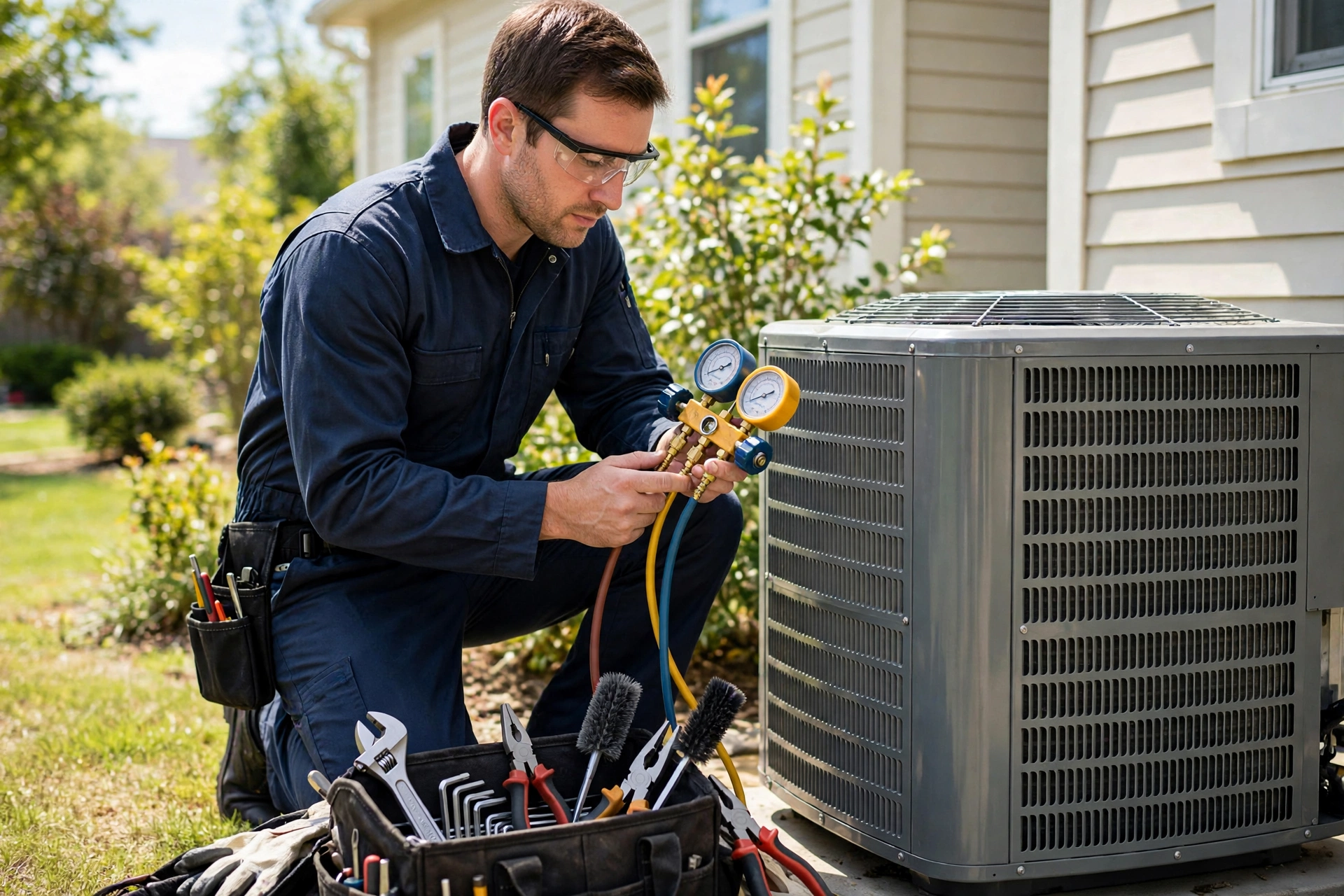
The Short Answer: Once a Year
For a standard home air conditioner, the answer is once a year. Most manufacturers and HVAC professionals recommend a professional service visit every twelve months, and the ideal time is spring — before the cooling season starts and before technicians get booked up with emergency calls.
If your system is a heat pump that heats in winter as well as cooling in summer, book twice a year — once before each season — because the unit works year-round.
Why Annual Servicing Actually Matters
An air conditioner has moving parts, refrigerant under pressure, and coils that collect dust all season. Left alone, small problems quietly grow into expensive ones. A yearly visit prevents that, for four practical reasons.
It keeps your bills down. Dirt on the evaporator and condenser coils makes the system work harder to move the same amount of heat. A clean, well-tuned unit cools your home using less electricity than a neglected one doing the same job.
It catches small faults early. A worn electrical connection, a clogged drain, or a slow refrigerant leak is cheap to fix when found during a routine visit. The same fault found on the hottest day of summer usually means an emergency call-out.
It protects the lifespan of the unit. Compressors and motors last longer when they are not straining against dirty filters, blocked airflow, or low refrigerant — regular servicing genuinely extends the working life of the system.
It keeps the air cleaner. Filters and coils trap dust and pollen. Cleaned or replaced on schedule, they keep less of that debris circulating through your rooms.
The Best Time to Book Your AC Service
Spring is the best time, and there are two good reasons for it. First, the visit finds any problems before you actually need the cooling, so you are not discovering a fault during a heatwave. Second, HVAC companies are usually less busy in spring than in mid-summer, which means easier booking and often a more relaxed, thorough visit.
If spring has already passed, do not wait for next year — a visit in early summer is still far better than skipping the year. Waiting until the unit breaks down is the worst option: by then the repair is usually bigger and more expensive.
What Happens During a Professional AC Service
A proper service visit is more than a quick look. A qualified technician will usually work through a checklist that covers the whole system:
- Inspect and clean the indoor evaporator coil and the outdoor condenser coil.
- Check the refrigerant level. Low refrigerant usually means a leak, which needs finding and fixing rather than simply topping up.
- Clear the condensate drain line so water cannot back up into the house.
- Test the thermostat for accurate temperature control.
- Inspect electrical connections, capacitors, and the contactor for wear or loose wiring.
- Check and replace the air filter if needed.
- Measure airflow and check that the blower is running smoothly.
- Test the safety controls and confirm the system starts and stops cleanly.
Ask the technician to explain anything they find in plain language before fixing it, so you leave knowing what was done and what to watch for.
When Once a Year Is Not Enough
The once-a-year rule covers most homes, but some situations call for a second visit each year:
- Heat pumps: they heat and cool, so they work all year. Two visits a year — one per season — is the standard advice.
- Older units: a system over ten years old has more worn parts and benefits from a mid-season check as well as the spring visit.
- Heavy daily use: if the AC runs almost all day, every day — for example in a very hot climate or a home office that never switches off — parts wear faster.
- Dusty or coastal locations: dust, sand, and salty air foul coils and outdoor units faster, so a second cleaning during the season can help.
- Pets that shed heavily: pet hair clogs filters and coils quickly. The service schedule may stay annual, but filters will need changing far more often.
If any of these apply, ask your technician whether a twice-yearly plan makes sense — it is a short conversation that can save you a mid-summer breakdown.
Simple Jobs You Can Do Yourself Between Visits
A few small tasks between visits keep the system running well and make the annual visit faster and cheaper.
- Change the filter regularly. Check it monthly and replace it every one to three months, depending on dust and pet hair in your home. A clogged filter is the most common cause of weak cooling.
- Keep the outdoor unit clear. Leave at least two feet of space around the condenser. Trim back plants, clear away leaves, and gently hose off surface dirt. Never bend the thin metal fins.
- Check the thermostat. If cooling feels off, confirm the thermostat is set to cool, the temperature setting is sensible, and the batteries are fresh if it uses them.
- Listen for changes. You know what your unit normally sounds like. A new rattle, buzz, or grinding noise is worth mentioning to your technician early.
Leave refrigerant, electrical work, and anything inside the sealed system to a licensed technician. Those jobs need specialist tools and, in most places, a qualified professional by law.
Signs Your AC Needs Attention Sooner
Do not wait for the annual visit if your system shows any of these warning signs:
- Air from the vents feels warm or the airflow is noticeably weak.
- The unit turns on and off in short bursts instead of running steady cycles.
- Unusual noises — grinding, squealing, or loud rattling.
- Musty or burning smells when the system runs.
- Water pooling around the indoor unit, which usually means a blocked drain.
- Energy bills climbing without any change in how much you use the system.
Any of these means the system is struggling, and running it in that state usually makes the problem worse. This is when finding a reliable air conditioning repair service matters more than finding the cheapest quote — a proper diagnosis now is almost always cheaper than a breakdown later.
Choosing a Technician You Can Trust
Look for a licensed and insured company with clear, written pricing before work starts. Ask what the visit includes, whether they will show you parts they recommend replacing, and whether they offer a maintenance plan that books the annual visit for you. When you are choosing the right home services for your property, a company that explains its work in plain language and leaves a written report is usually a safer bet than one that rushes through the job.
FAQs
How much does an AC service visit cost?
It varies by region, company, and system size. Get a written quote before the visit and ask exactly what it includes, so you compare like with like.
Can I service my AC unit myself?
You can handle the basics — changing filters, keeping the outdoor unit clear, and checking the thermostat. A full service, including refrigerant checks and electrical inspection, needs a licensed technician with the right tools.
Does skipping service affect my warranty?
Some manufacturers require proof of regular professional maintenance to honour a warranty claim, so check the terms of your own warranty. Keeping the service records from each visit is good practice either way.
Final Thoughts
Service your home AC unit once a year, in spring, before the heat arrives — twice a year if it is a heat pump or an older, heavily used system. Change the filter every one to three months, keep the outdoor unit clear, and call a technician promptly if anything sounds, smells, or feels wrong. That small annual habit keeps your home cool, your bills reasonable, and your air conditioner running for years — instead of breaking down on the hottest day of the year.