

You step into the shower expecting a warm start to the day, and instead you get lukewarm water that turns cold halfway through. Or you walk past the utility closet and notice a small puddle you cannot explain. Water heaters rarely fail without warning — they usually send a few quiet signals first. If you know what to look for, you can replace the unit on your schedule instead of mopping up a flooded floor on its schedule. Here are the signs that matter, and what to do about each one.
How Long Should a Water Heater Last?
Before you worry about a noise or a drip, it helps to know where your unit sits in its expected life. According to the U.S. Department of Energy, a conventional storage-tank water heater typically lasts 10 to 15 years, while a tankless model can last 20 years or more. Most tank models in real homes land toward the shorter end of that range, especially with hard water or a tank that is never flushed.
If you do not know how old yours is, check the label on the side of the tank — the manufacture date is printed there or encoded in the serial number, and the maker’s website can help you decode it. A unit past 10 years is not automatically dying, but it deserves closer attention.
1. Rusty or Discolored Hot Water
Run the hot tap and watch the colour. If the water comes out brown, orange, or cloudy while the cold tap runs clear, corrosion is very likely forming inside the tank. The steel tank is protected by a glass lining and a sacrificial anode rod, and once that protection is used up, rust starts on the tank walls. A rusty tint that clears after a few seconds may just be loose sediment, but colour that keeps coming back is one of the clearest early warnings. Do not ignore it: rust inside the tank does not reverse itself.
2. Rumbling, Popping, or Banging Noises
A healthy water heater hums quietly. If yours rumbles, pops, or bangs while it heats, hardened sediment is almost certainly the cause. Minerals in the water settle at the bottom of the tank over time, and water trapped under that layer boils and shifts as it heats — that is the noise you hear. Sediment also forces the heating element or burner to work harder, wasting energy and shortening the tank’s life. A yearly flush can help if the buildup is still light; if the noise returns quickly after flushing, the tank or an element may be on its way out.
3. Water Pooling Around the Base
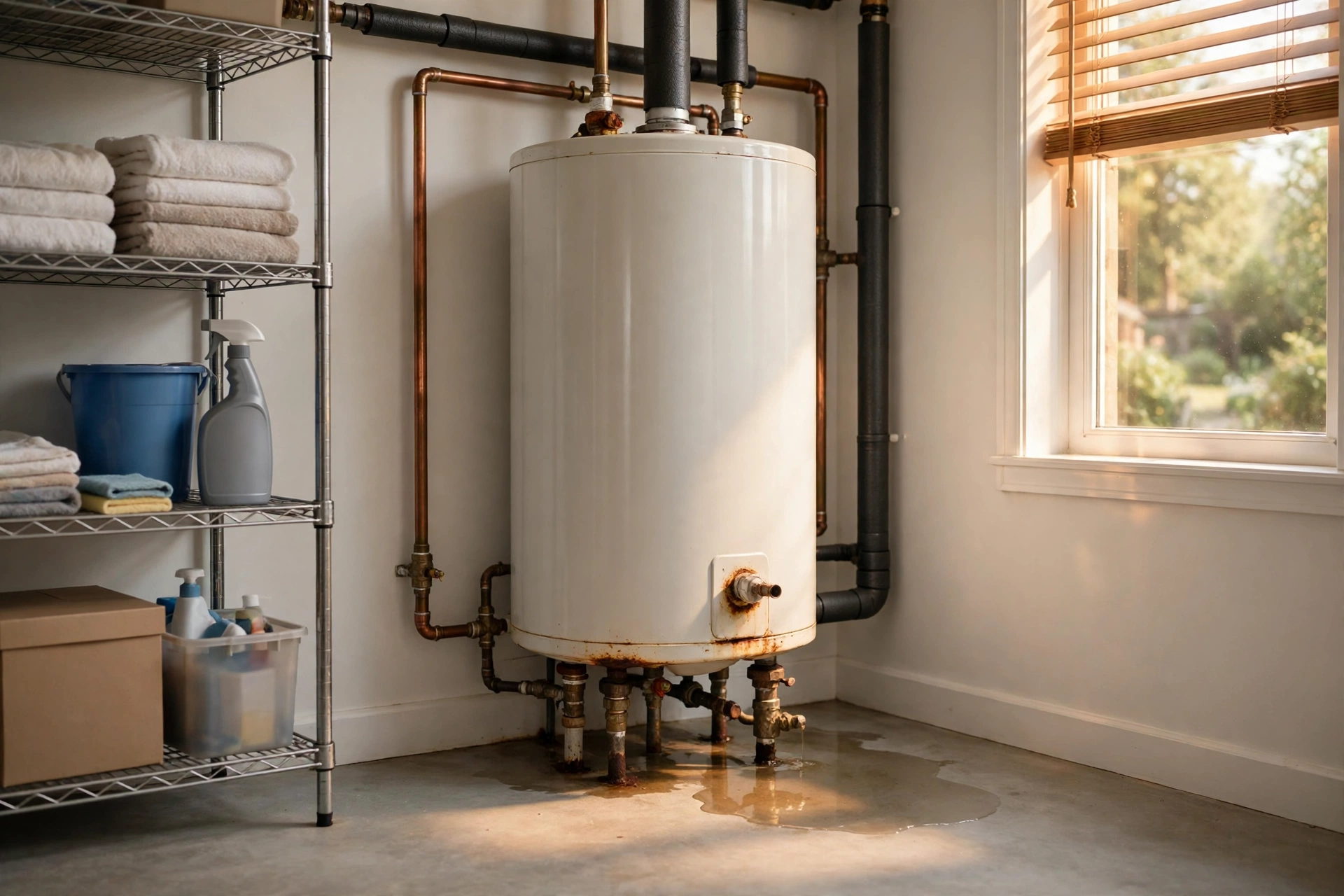
Any moisture at the base of the tank deserves your attention the same day you spot it. A drip from a valve or a fitting on top of the unit may be a simple repair. A leak from the tank body itself is different: corroded steel cannot be repaired, and a leaking tank means replacement whatever its age. Even a small puddle can grow into a flooded floor overnight, so find the source or call a plumber.
4. Hot Water Runs Out Faster Than It Used To
Think back to how your heater used to perform. If back-to-back showers were never a problem and now the second person gets a cold surprise, sediment is the usual suspect: mineral deposits take up space inside the tank and insulate the heating element, so the unit holds less usable hot water than it used to. A failing heating element or thermostat can cause the same problem. If flushing does not restore the old capacity, the unit is telling you it is near the end.
5. Inconsistent Water Temperature
Water that swings from hot to lukewarm and back again — or a shower that is hot one minute and cold the next — points to a thermostat or heating element that is no longer doing its job reliably. A single lukewarm shower might just be a one-off, but a pattern of temperature swings is a warning. It is also worth checking that the thermostat is still set to 120°F (about 49°C), the setting the U.S. Department of Energy recommends for most households.
6. Visible Rust or Corrosion on the Tank and Fittings
Take a look at the tank itself, especially around the inlet and outlet connections on top, the pressure-relief valve, and the base. Rusty streaks, greenish corrosion on copper fittings, or flaking around the seams mean moisture and corrosion are already at work. Visible corrosion outside usually means corrosion inside, too.
7. Your Water Heater Is Simply Old
Age alone is a sign worth respecting. A tank water heater past the 10-year mark is living on borrowed time, even if it still seems to work fine — manufacturers generally suggest starting to plan for a replacement around year 10. If your unit is 12 to 15 years old, a sudden failure is a matter of when, not if. Budgeting for a replacement now beats paying for emergency plumbing and water damage later.
8. Rising Energy Bills or Repeat Repairs
A water heater that has lost efficiency shows up on your energy bill before it shows up as a visible failure. If your bills are creeping up without another explanation, or you have called a repair technician twice in a year for the same unit, that spending pattern is a signal. One part replaced on a young tank is maintenance. A third call on an old tank is the tank telling you something.
What to Do If You Spot These Signs
Do not wait for a complete failure. Work through these steps in order:
- Check the age. Read the label on the tank and work out how many years of service it has left.
- Run the hot tap. Note the colour and temperature, and whether the problem affects only the hot side.
- Inspect the tank. Look for moisture at the base, rust on fittings, and corrosion around the relief valve.
- Flush the tank. The U.S. Department of Energy suggests draining about a quart of water from the tank every three months to limit sediment. If you are not comfortable doing this yourself, a plumber can flush it and inspect the anode rod at the same time.
- Get replacement quotes early. Prices and availability are far kinder when you are not in an emergency.
Home appliances reward the same habit: regular servicing catches small problems early. If you are building a maintenance routine for your home, it is worth knowing how often you should service your home AC unit too — the same logic applies to your water heater. And if you would rather have a professional inspect the unit, this guide to superior home services explains what a reputable provider should cover.
Repair or Replace?
Repair usually makes sense when the unit is under eight years old, a single part has failed, and the tank itself is not leaking. Replace it when the tank body leaks, rusty water keeps coming back, or you are facing repeat repairs on a unit that is 10 years or older.
One safety note: if you have a gas water heater and smell gas, do not try to fix anything yourself. Leave the house and call your gas utility. Likewise, if the pressure-relief valve keeps discharging water, turn the unit off and call a professional rather than capping or blocking the valve.
FAQ
Can I still use a water heater that is leaking?
No. Turn off the power or gas supply and the water supply to the unit, and call a plumber. A leaking tank can rupture without warning and flood the room.
How often should I flush my water heater?
Most manufacturers recommend a full flush once a year. The U.S. Department of Energy also suggests draining about a quart of water from the tank every three months to keep sediment from building up.
Final Thoughts
A water heater gives you plenty of warning before it fails — rusty water, odd noises, a damp floor, shorter hot showers, or simply old age. Catch one of these signs early and you get to choose the replacement on your terms, with time to compare prices. Miss them, and the heater chooses the timing for you, usually at the worst possible moment. Take ten minutes this week to check yours.