

You open the front door, your new puppy in your arms, and suddenly your quiet house feels completely different. The puppy sniffs the air, looks up at you, and in that moment you realise the next seven days will set the tone for everything that follows. This puppy’s first week at home checklist walks you through those days one step at a time.
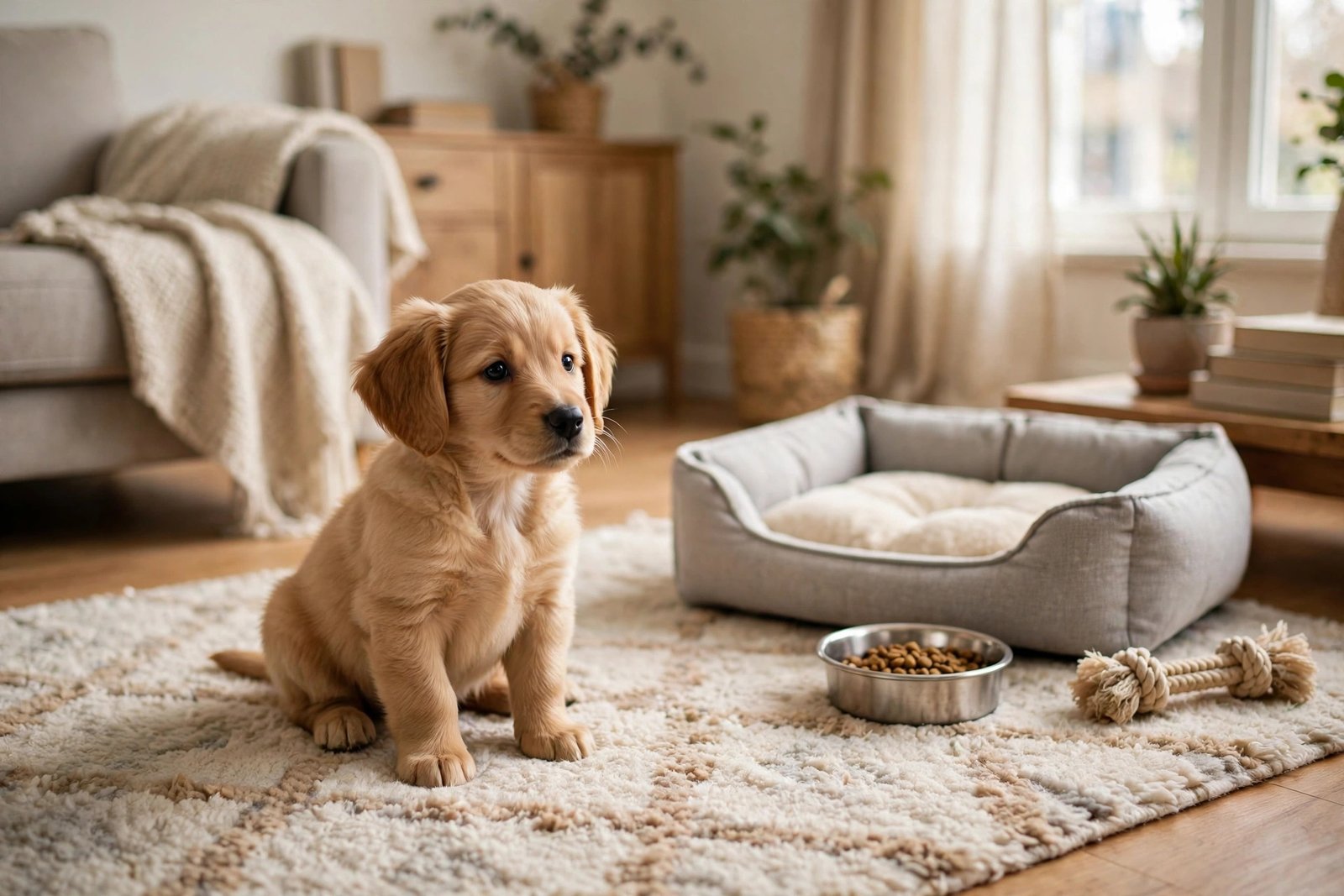
Before Your Puppy Arrives: The Essentials
Gather the basics a day or two early, so you are not scrambling for supplies while a nervous puppy waits.
- A bed or crate in a quiet corner, with a blanket that smells familiar if the breeder or shelter can provide one.
- Food and water bowls, plus the same food your puppy has been eating. Changing food on day one is a common cause of upset stomachs, so keep the old food for the first week and switch gradually later if you want to.
- A collar, lead and ID tag, fitted so two fingers slide underneath.
- Toilet-training supplies: puppy pads or a designated garden spot, poo bags and an enzyme-based cleaner for accidents.
- A few safe chew toys and a puppy-safe chew to keep those needle-sharp teeth busy.
- A vet appointment booked for the first few days, plus your puppy’s vaccination and worming records in one place.
Choose one room as your puppy’s home base for the first days. A smaller, easy-to-clean space with the bed, bowls and a toilet area close by helps your puppy feel secure instead of overwhelmed by a whole house at once.
Day 1–2: Let Your Puppy Settle In
The first forty-eight hours are about comfort, not training. Your puppy has just left everything familiar — its mother, its littermates and the only home it has known — so expect some whining, clinginess and even a skipped meal. All of that is normal.
Keep the house calm. Introduce family members one at a time, keep visitors away for the first day, and let your puppy explore its home-base room at its own pace.
Start the toilet routine immediately: take your puppy outside (or to the pad) first thing in the morning, after every meal, after naps, after play and last thing at night. Praise quietly the moment it goes in the right place. Accidents will happen — clean them without fuss and move on. Shouting only teaches a puppy to hide from you when it needs to go.
Night one is usually the hardest. A ticking clock or a warm water bottle wrapped in a towel near the bed can comfort a puppy used to sleeping against its littermates. Expect to wake once or twice for a toilet trip.
Day 3–4: Start the Routine
By day three your puppy will start showing its real personality. Puppies feel safe when the day is predictable, so keep feeding, sleeping, playing and toilet breaks at roughly the same times each day.
Feeding: most young puppies do best on three to four small meals a day, spaced evenly, rather than one or two large ones. Measure the food rather than guessing, and keep fresh water available at all times. If your puppy refuses food for more than a day, or has ongoing diarrhoea, call your vet rather than waiting it out.
Sleep: puppies sleep a lot — often eighteen hours or more in a day — and a tired puppy is a well-behaved one. Build short naps into the routine after play and training, and resist the urge to wake a sleeping puppy for cuddles.
As you embark on this transformative journey of welcoming a puppy into your home, it’s crucial to establish a solid foundation that will not only ease the transition for your new companion but also pave the way for enjoyable experiences ahead. A well-adjusted puppy will be more receptive to training, including essential behaviors like walking on a lead. By beginning with positive reinforcement techniques and understanding the importance of consistent training, you can effectively teach your puppy proper lead manners. This is vital, as it directly impacts your ability to enjoy daily walks together. For guidance on effective methods, explore strategies on how to stop a dog pulling on the lead, ensuring that your walks are both relaxed and enjoyable for you and your furry friend.
First training moments: keep sessions to two or three minutes, a few times a day. Your puppy’s name, a reliable recall word and a simple “sit” are enough for week one. Reward with a tiny treat or praise the instant your puppy does the right thing, and end every session on a success. Start gentle handling too: touch the paws, ears and mouth briefly each day, paired with treats. These short exercises make future vet visits and grooming far easier.
Day 5–7: Training, Socialisation and the Vet Visit
By the end of the week your puppy should know where to sleep, where to eat and roughly when meals happen. Now you can widen its world a little.
The vet visit: if you have not been yet, this is the time. The vet will check your puppy over, confirm the vaccination schedule and answer questions about feeding, worming and flea treatment. Bring your puppy’s records, a list of questions and a few treats so the visit ends on a good note. If you want to know what health signs to watch for as your puppy grows, our guide to common health problems to watch for in young dogs explains the warning signs every owner should recognise early.
Socialisation, gently: introduce your puppy to new sounds, surfaces and friendly people in short, positive doses — the vacuum cleaner from another room, a walk in your arms down a quiet street, a calm visitor offering a treat. The goal is a puppy that meets new things with curiosity, not fear. Until vaccinations are complete, avoid dog parks and areas where unknown dogs toilet; carry your puppy in busy places instead.
Puppy-Proofing Your Home
Walk through your home at puppy height before your puppy discovers it for itself. Move cleaning products, medicines, cables and small swallowable objects out of reach, secure bins, and block off stairs and rooms you do not want explored yet.
Hide or cover anything you value that sits at chewing height: shoes, phone chargers, remote controls and the corners of furniture are all prime targets during teething. A good habit is to do a quick room-by-room check — a room-by-room home preparation checklist shows the kind of methodical walk-through that works well here too.
Common First-Week Mistakes to Avoid
- Too much freedom too soon. A whole house on day one is overwhelming and makes toilet training far harder. Grow the space gradually as your puppy earns it.
- Changing food immediately. Stick with the breeder’s or shelter’s food for at least the first week.
- Skipping the vet visit. Even a healthy-looking puppy needs a check-up and a vaccination plan in the first days.
- Long, intense training sessions. Five minutes is plenty. Short and happy beats long and frustrated every time.
- Letting everyone hold the puppy at once. One calm introduction at a time keeps your puppy confident instead of frightened.
- Ignoring sleep. An overtired puppy bites, barks and cannot learn. Protect nap time — for a puppy, it is sacred.
Frequently Asked Questions
How much should a puppy eat in its first week?
Follow the feeding guide on your puppy food’s packaging for your puppy’s age and expected adult weight, split into three or four meals a day. Keep the same food your puppy was eating before it came home for the first week, and check with your vet if you are unsure about portions.
How do I stop my puppy crying at night?
Some crying in the first nights is normal. Keep the bed close to you for the first few nights, tire your puppy out with gentle play before bed, and take it out for a toilet break when it wakes. Keep lights low, voices quiet, and settle your puppy straight back to bed.
When can my puppy go outside for walks?
That depends on your puppy’s vaccination schedule, so ask your vet at the first visit. Until then, you can still socialise your puppy by carrying it outside to see the world, and by letting it explore your own garden if it is secure and other dogs do not use it.
Final Thoughts
Your puppy’s first week at home is not a test you have to pass perfectly — it is the beginning of a relationship. Some days will be messy, some nights will be broken, and your puppy will chew something you wish it had not. But if you keep the routine steady, stay patient with the accidents and give your puppy time to feel safe, you will end the week with a little dog that trusts you. That trust is the real checklist item everything else is built on.